
SugarPop
A molded-pulp carrier for canned multipacks that swaps the plastic ring for sugarcane waste — snap-fit, no glue, cut to 4-, 6-, or 8-pack. Won Best Out-of-the-Box Thinking at the 48-Hour Repack Competition.
48hrs
Competition window
Award
Best Out-of-the-Box Thinking
100%
Biodegradable
Bagasse
Sugar waste material
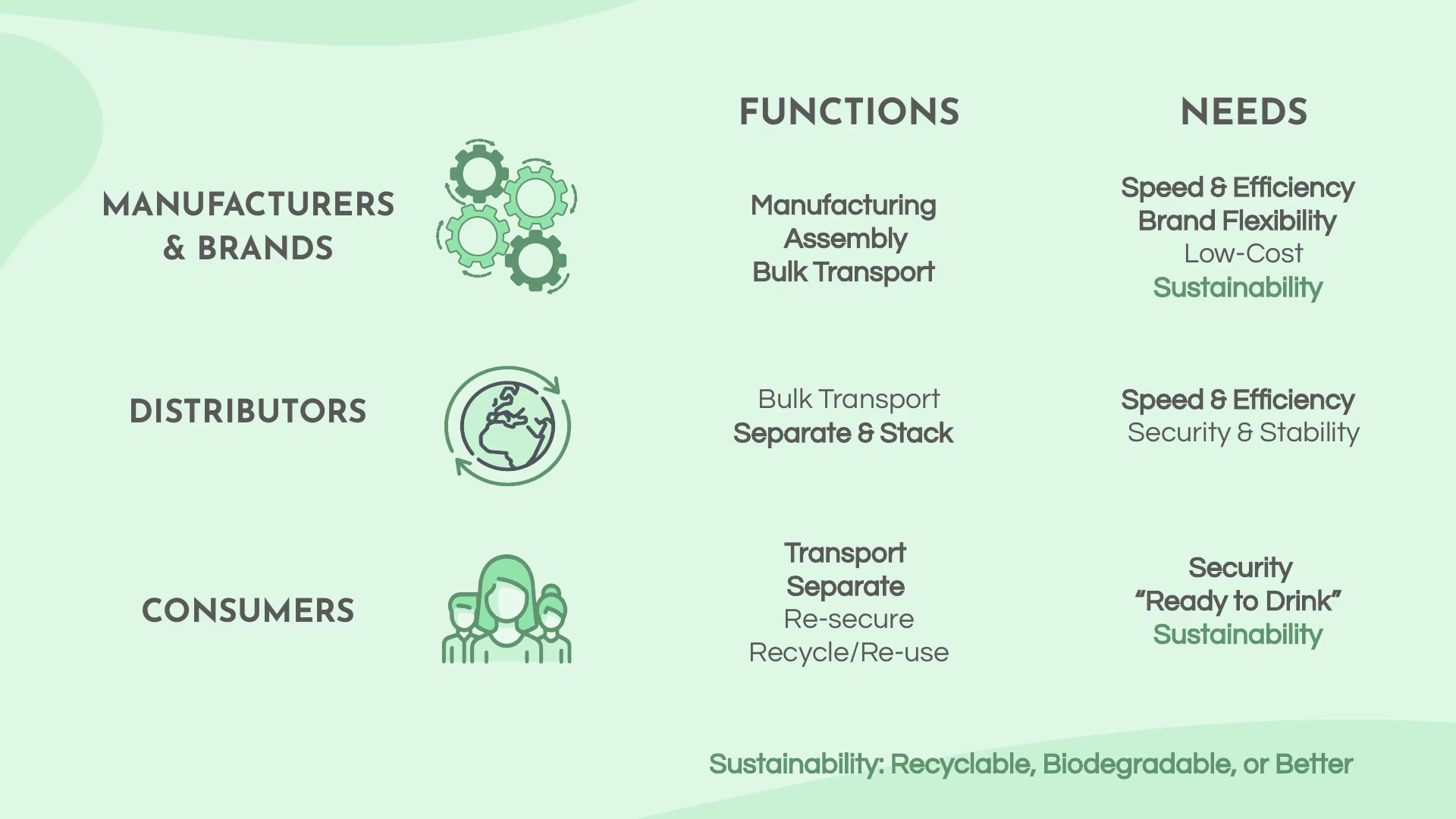
The team's target was the plastic six-pack ring — replace it without asking manufacturers, distributors, or consumers to change how they already handle a case of cans. The stakeholder map made that ask concrete: each group was mapped against its own functions and needs, and sustainability showed up as a stated need for manufacturers & brands and for consumers, not as an add-on goal the design had to argue for.
My Role
Package designer. Concept, structural design, material selection, prototype fabrication. Team: Rob Stout + Shrinka Roy.
Framework
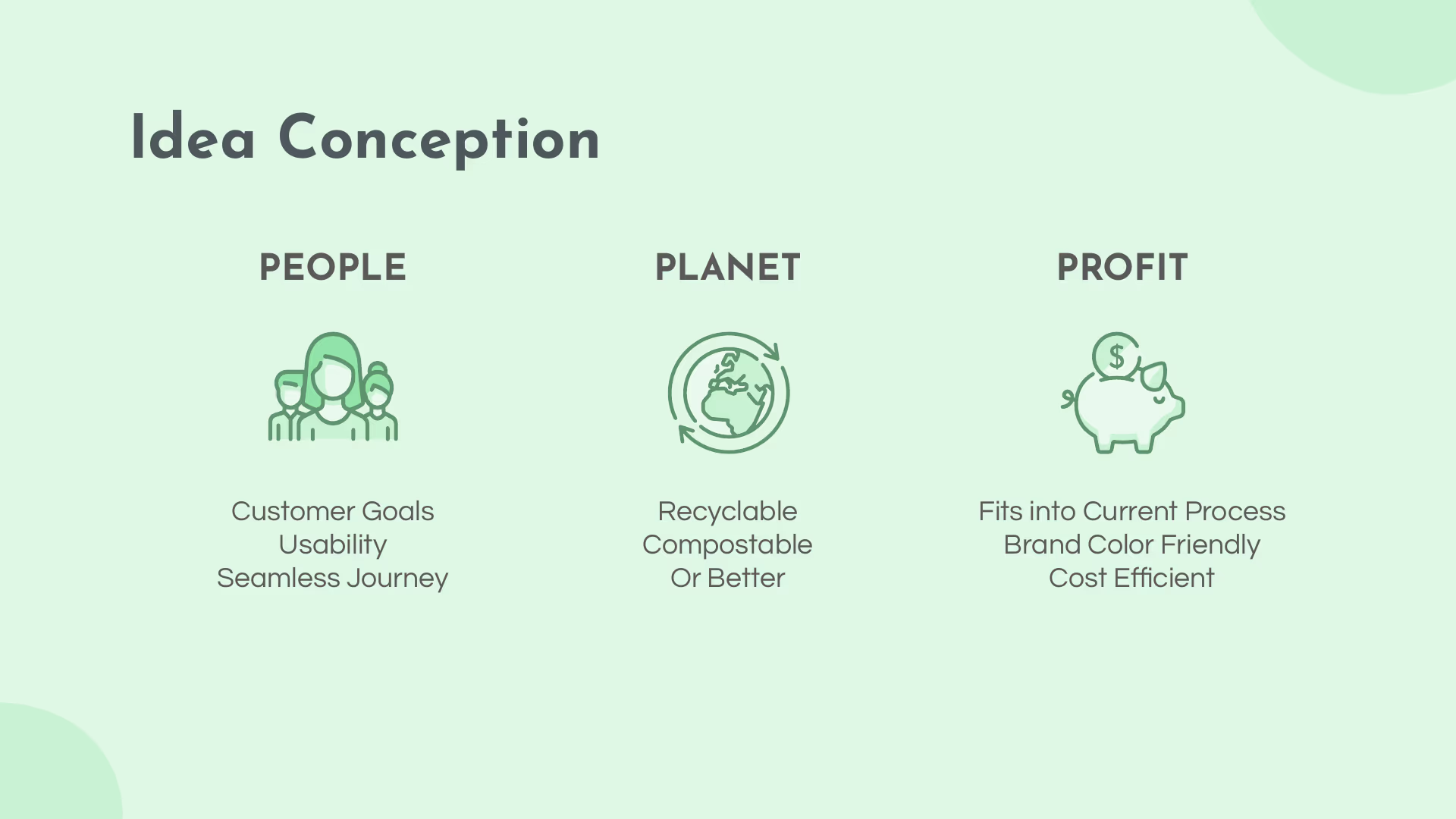
People, Planet, Profit — before any sketch
Every packaging idea got weighed against three questions: does it work for the customer (People), does it reduce environmental impact (Planet), and does it fit into how manufacturers already make and sell things (Profit)? The team used that framework from concept through material selection — three lenses every idea had to survive.
Stakeholders
Three stakeholders, one shared requirement
The team mapped what manufacturers & brands, distributors, and consumers each need from the carrier — speed, security, stability, cost — and found sustainability already sitting on two of the three lists, not something the design had to make the case for.
Material
From bamboo to bagasse
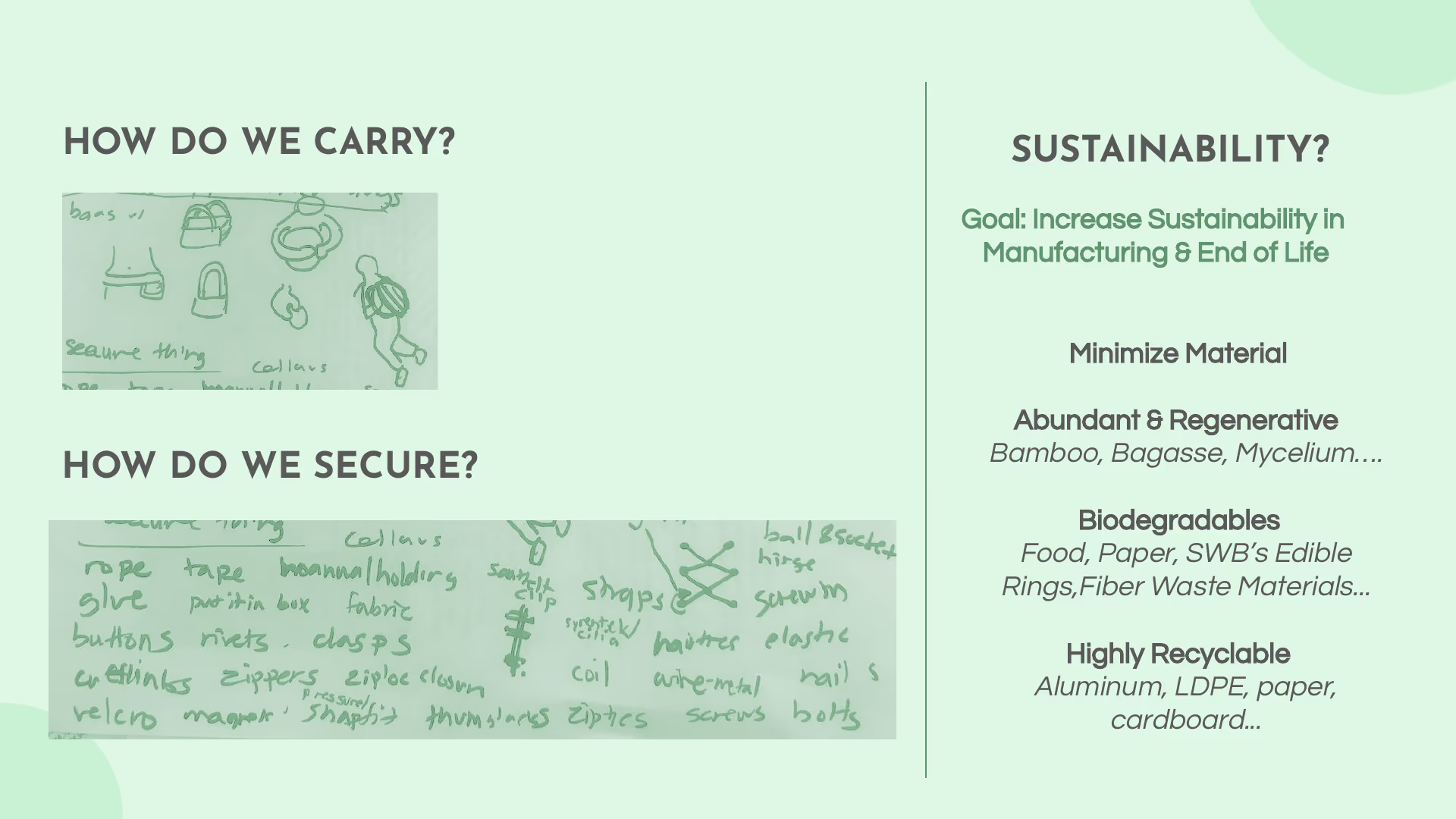
The material search ran wide before it narrowed: abundant/regenerative options like bamboo and mycelium, biodegradables like paper and edible rings, highly recyclable options like aluminum and LDPE. Carrying the pack and securing it to the cans were treated as separate problems and sketched separately before either was solved.
The Fix
A molded-pulp carrier that replaces the plastic ring
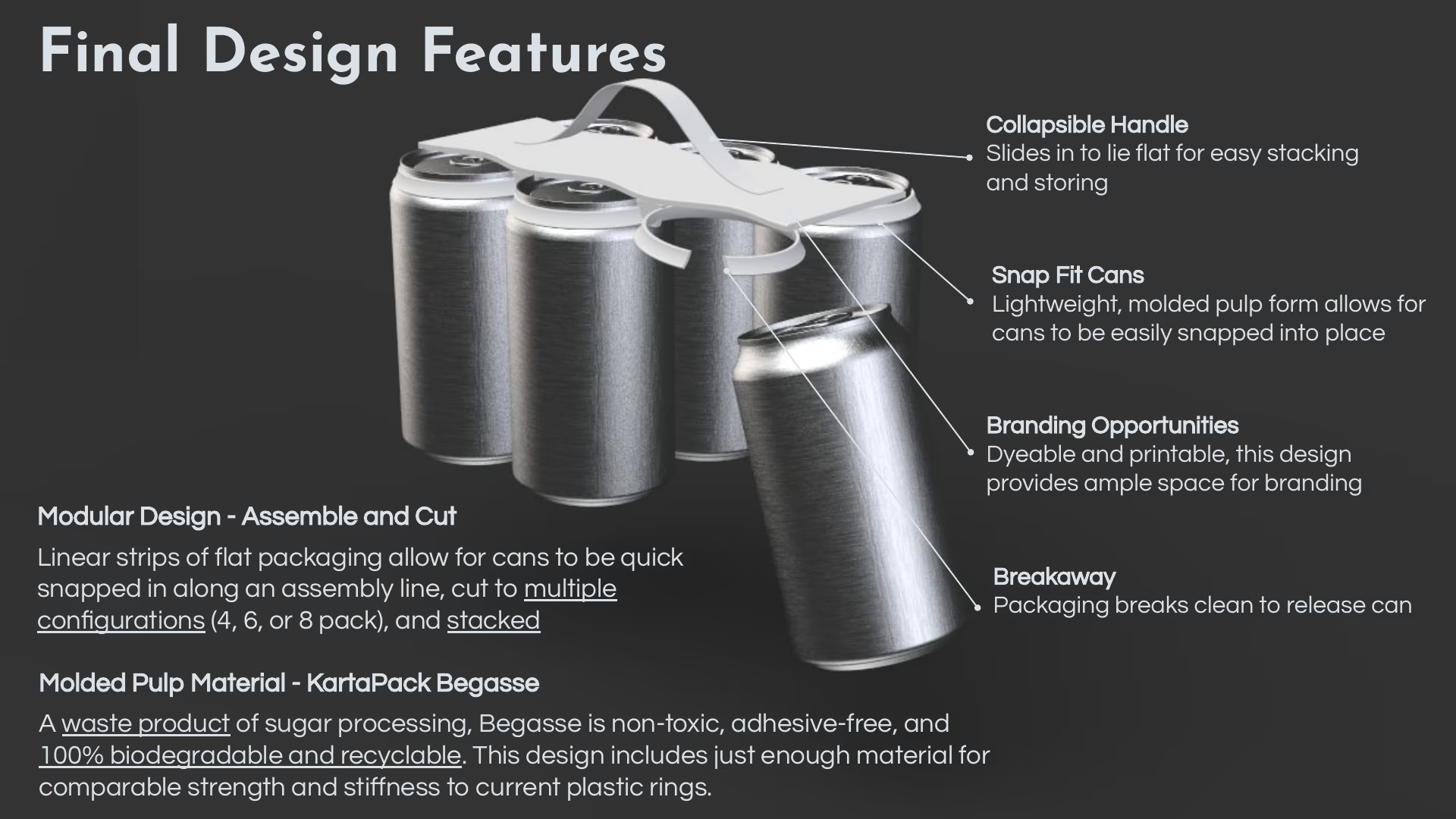
The final design snaps cans into a bagasse carrier with a collapsible handle that slides in to lie flat for stacking, and a breakaway that releases each can cleanly. Linear strips of flat packaging cut into 4-, 6-, or 8-pack configurations along an assembly line.
The material is KartaPack bagasse — a waste product of sugar processing that's non-toxic, needs no adhesive, and is 100% biodegradable and recyclable. The deck's own claim: just enough material for comparable strength and stiffness to current plastic rings.
Working under constraint
The brief also had to survive contact with reality: a grip-friendly handle that stays structurally sound while stacked, printable in brand colors (most sustainable stocks aren't), built in corrugated cardboard and reused beverage boxes on a timeline squeezed between work and school.
Process Book
The full 8-page deck
Shrinka Roy and I built this together for the 48-Hour Repack Competition. Everything we did in those two days is below: the framework we set, the stakeholders we mapped, the materials we considered, and the carrier we landed on.
Shrinka was finishing an MBA and a Master's of Industrial Design; I was in the Industrial Design program. My side of it was the concept, the structural design, the material choice, and building the prototype.
The pages below are rendered at reading size. For the dense stakeholder tables, open the PDF — it zooms.
Open the full PDF →Process
Weighed every idea against People, Planet, and Profit.
Mapped manufacturer, distributor, and consumer needs — sustainability showed up on two of three lists.
Searched bamboo, mycelium, and edible rings before choosing bagasse.
Built the snap-fit carrier in corrugated cardboard; won 'Best Out-of-the-Box Thinking.'
What Shipped
48hrs
Competition window
100%
Biodegradable & recyclable
4/6/8
Pack configurations
Won 'Best Out-of-the-Box Thinking' at the 2021 48-Hour Repack Competition, designed with Shrinka Roy. The team framed the brief through People/Planet/Profit, mapped three stakeholders down to a shared sustainability requirement, and landed on a molded bagasse carrier — snap-fit, no adhesive, collapsible handle, cut to 4-, 6-, or 8-pack — with the deck's stated aim of comparable strength to the plastic ring it replaces. Prototyped in corrugated cardboard within the competition window.
- Won 'Best Out-of-the-Box Thinking' — 48-Hour Repack Competition, 2021
- Material: KartaPack bagasse, a sugar-processing waste product that's non-toxic, adhesive-free, and 100% biodegradable and recyclable
- Modular snap-fit design cuts to 4-, 6-, or 8-pack configurations from linear strips on an assembly line
- Collapsible handle slides in to lie flat for stacking; breakaway releases each can cleanly
What I Learned
The three-part framework mattered because it forced trade-offs into the open early: People (customer usability), Planet (recyclable/compostable materials), and Profit (fits current manufacturing, holds brand color, stays cost-efficient) each had to hold on its own. Profit was the live constraint — most sustainable stocks can't hold brand color the way plastic can, so printability stayed on the challenge list all the way to a final material that is dyeable and printable. Bagasse cleared all three: it's a waste stream that already exists, it's biodegradable and recyclable, and it cuts from linear strips into standard 4-, 6-, or 8-pack sizes. The build itself was constrained the same way the material search was — a timeline squeezed between work and school meant prototyping the mechanism in corrugated cardboard and reused beverage boxes before committing to the final material.
What this demonstrates
More Work
All projects →