
Scooter Ergonomics
I have the data on who Bird and Lime actually designed their scooters for. The answer is: nobody who exists.
3
Must-have design changes identified
15.57M
Net riders better served by a +5cm handlebar
160%
Of Bird's platform width a 95th-percentile male needs
8.76 cm
Small-hand grip span vs Bird's 9 cm brake reach
Rideshare scooters are designed for a hypothetical average rider who does not exist in the actual population. The anthropometric assessment surfaced three separate failures, each against a different measurable population: the standing platform is narrower than a 95th-percentile rider's feet, the handlebar height is built around a 165.1cm ideal rider — the 6th percentile for men, and the brake lever sits beyond the grip span of a small-handed rider. Three distinct dimensions, three distinct fixes.
My Role
Human factors researcher and analyst. Anthropometric assessment, statistical analysis, user testing protocol, ergonomic recommendation design. Team: Michael Armstrong, Julio de Pereda, Yunuo Huang, Dahee Kim, Rob Stout, Iris Sun.
Assessment
Two scooters, measured
Bird Two and Lime, assessed against the same set of ergonomic dimensions: handlebar height and span, platform length and width, brake lever reach, grip force.
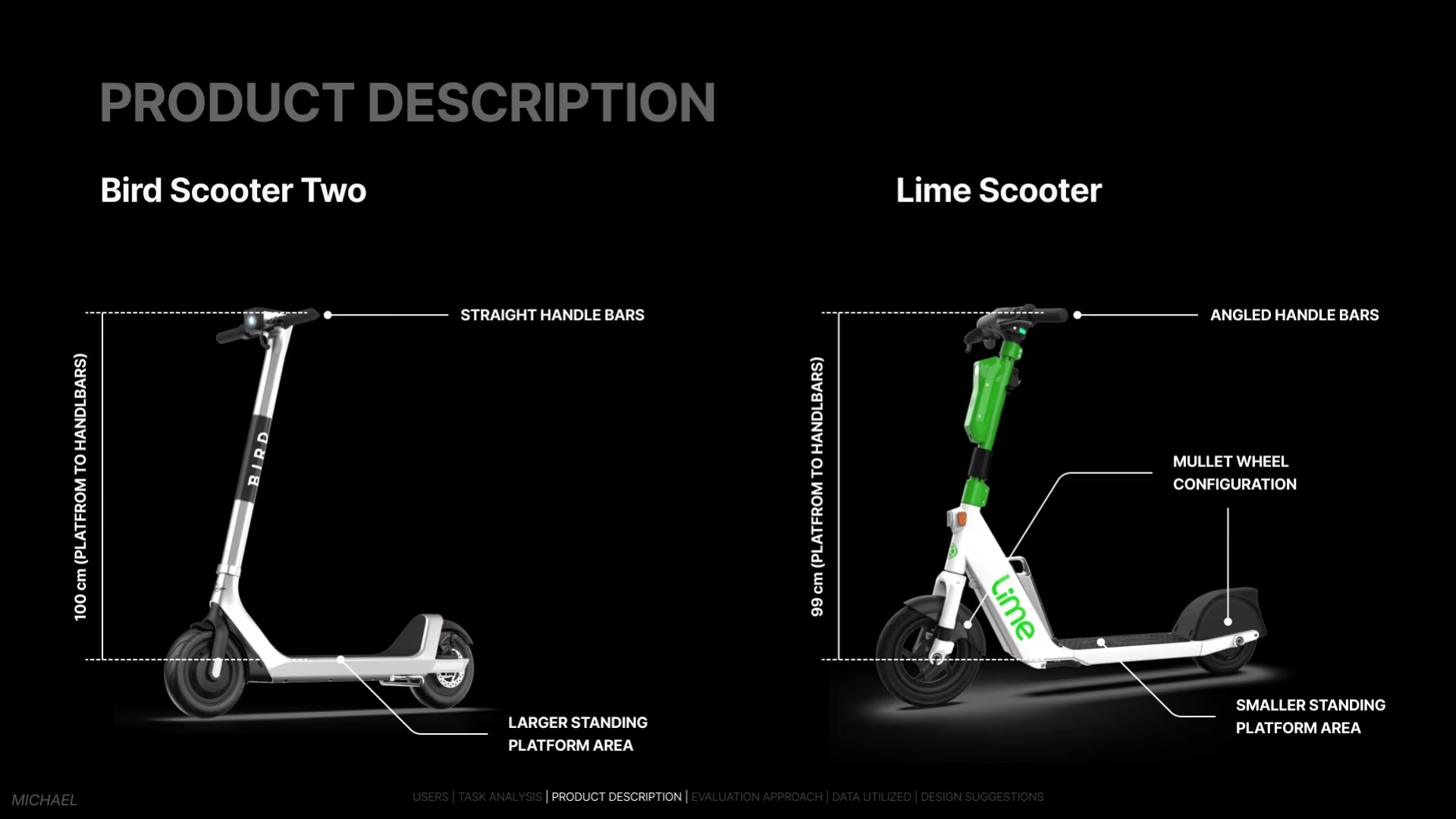
The two platforms, dimensioned. Bird Two: straight bars, larger deck. Lime: angled bars, smaller deck.
Suggestion One
Wider standing platform
Bird's platform is 15cm wide, Lime's is 16cm. A 95th-percentile male's two shoes measure 24cm across, side by side — 160% of Bird's platform width, 150% of Lime's. A 99th-percentile female's two shoes measure 23cm, needing 153% of Bird's platform and 144% of Lime's.
Riders' feet overhang the deck on both scooters. A wider platform is what lets both feet plant fully, which is where standing stability and comfort actually come from.
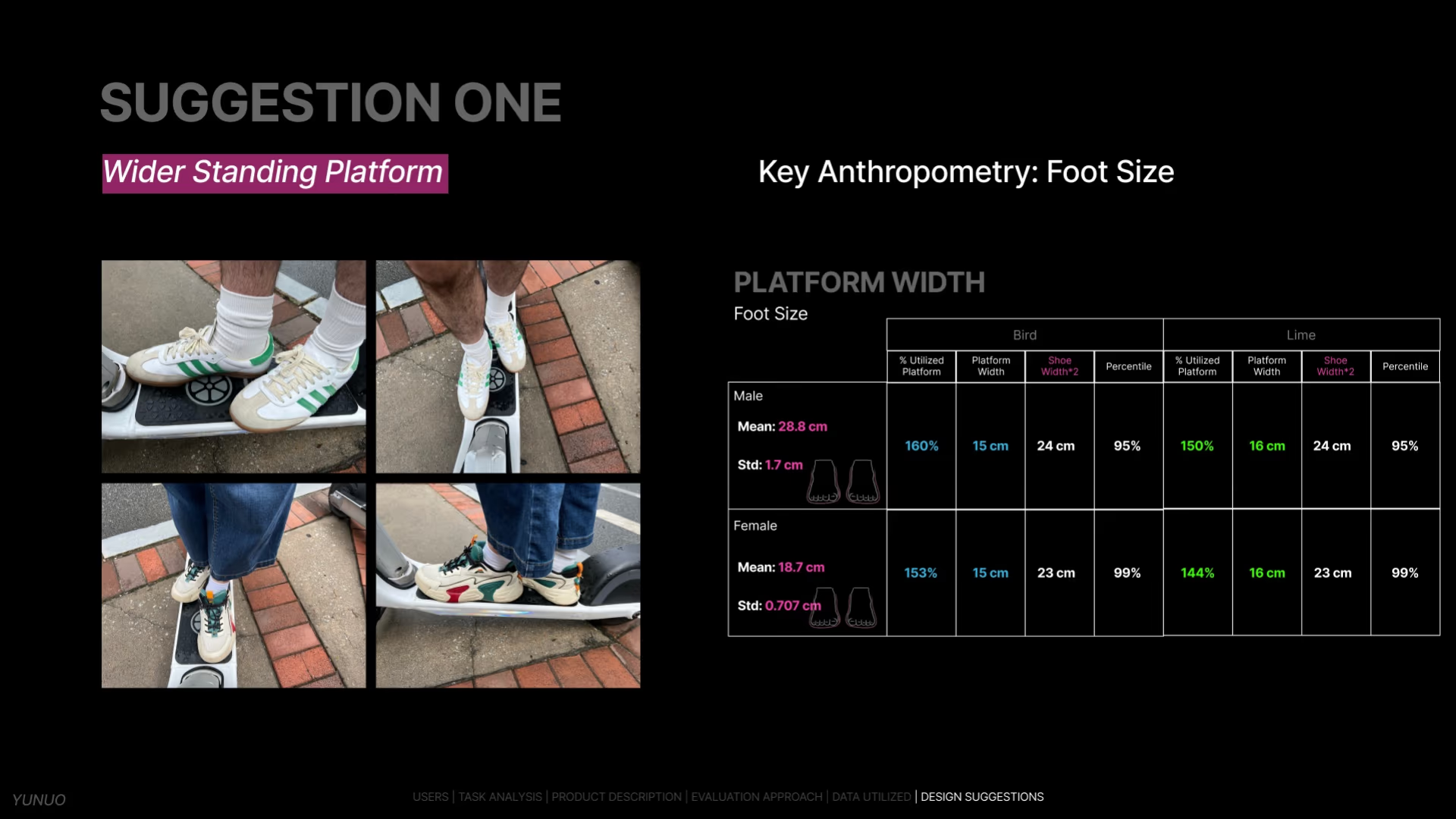
A 95th-percentile male's feet use 160% of Bird's platform width. There's no stance where both fit.
Suggestion Two
Raise the handlebar 5cm
Current handlebar geometry has an ideal rider stature of 165.1cm — the 6.16th percentile for men, so most male riders stoop to reach the bars comfortably. The same geometry sits at the 50.52th percentile for women, who are already well served.
Raising the handlebar 5cm moves the ideal stature to 172cm. That shifts the male ideal to the 23.67th percentile and the female ideal to the 81.80th. In population terms: 14,936,529 more men served with zero men worse off, and a net of 636,921 more women served, against 322 women worse off.
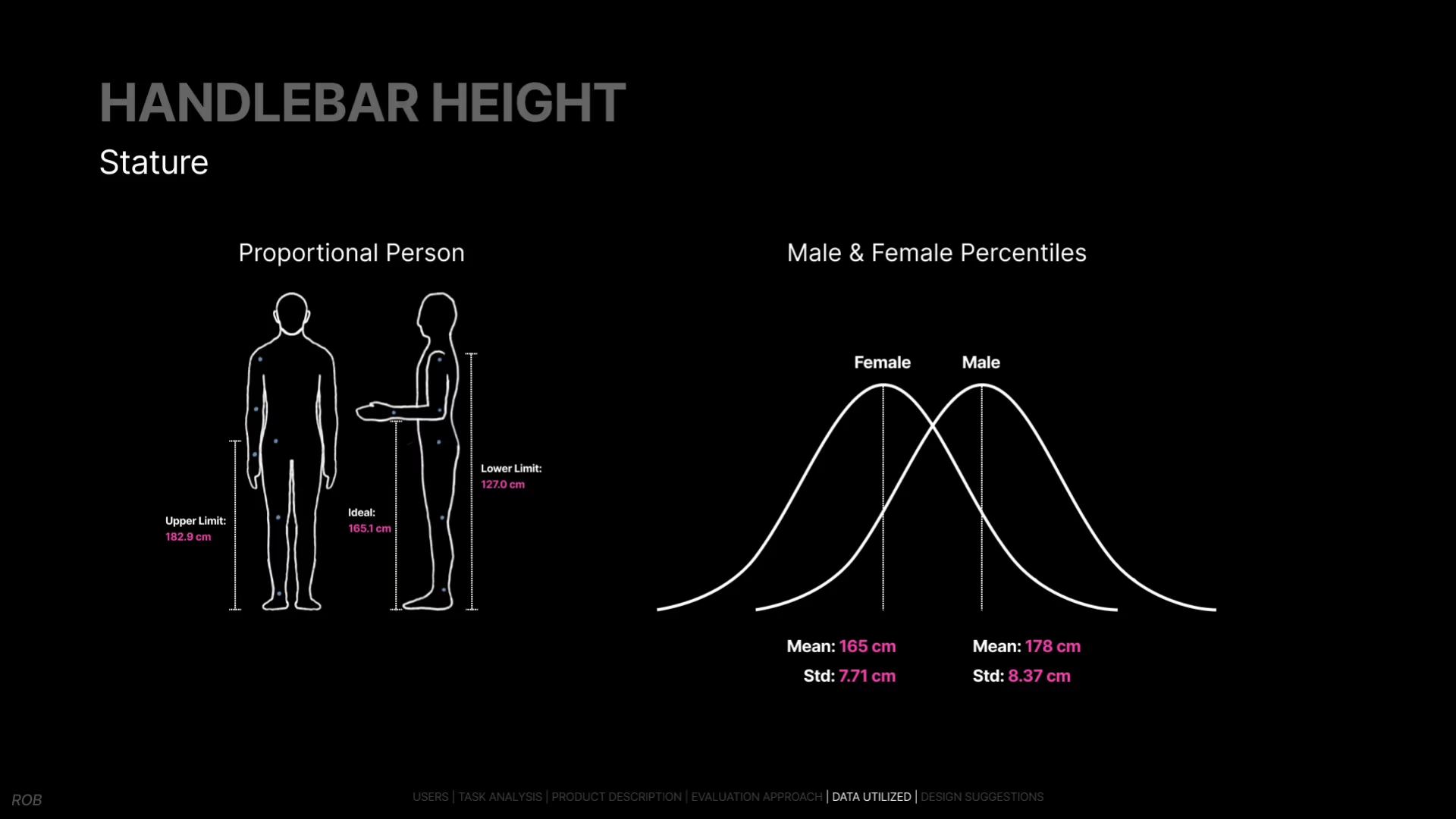
Male and female stature distributions against the comfortable handlebar range. The overlap is the whole design problem.
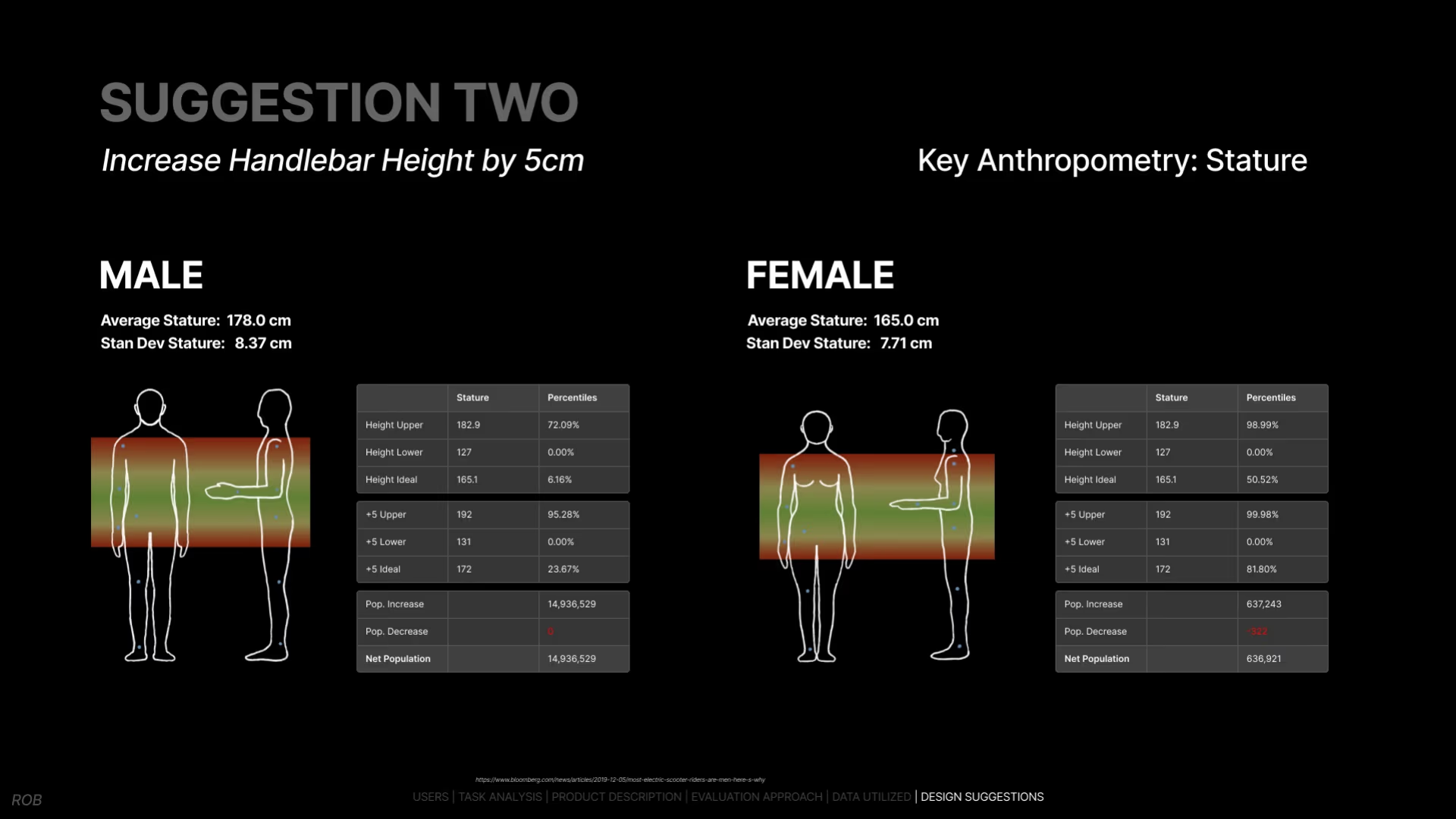
The population math behind the 5cm change. Men gain outright. Women gain on net, with 322 worse off.
The deck's own number
"By increasing the height of the handlebars, we can create a more comfortable and controlled experience for 15,573,450 male & female scooter riders." That's 14,936,529 men and a net 636,921 women — all from stature, not from handlebar span.
Suggestion Three
Shorter brake lever reach
Bird's brake lever sits 9cm from the grip; Lime's sits 11cm. The 2.5th-percentile female grip span is 8.76cm — narrower than either lever's reach. The 2.5th-percentile male grip span is 9.48cm, narrower than Lime's 11cm.
Rear-brake pull force is 6kg on Bird and 5.5kg on Lime. A rider whose grip span is narrower than the lever's reach can't close their hand fully around it, which costs them control over how hard they're braking.
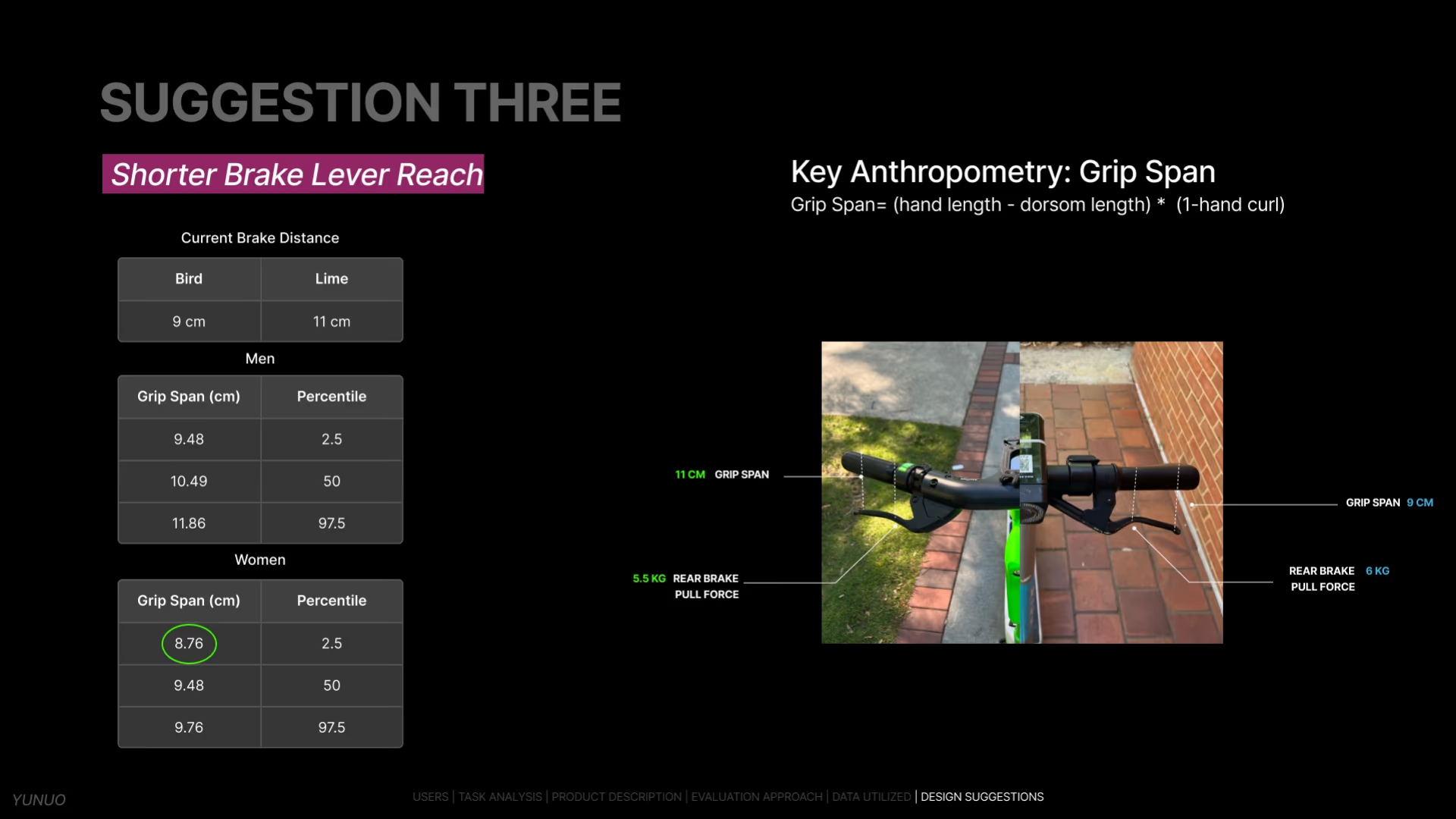
The 2.5th-percentile female grip span — 8.76cm — is narrower than both brake levers.
The should-have
Handlebar span is a separate finding from handlebar height
Handlebar span — the distance between the grips — is measured against shoulder breadth, not stature. It's a different anthropometric dimension from the height fix above, and the deck keeps the two separate.
Bird's 50cm span leaves 30.9025% of men too broad-shouldered to grip it without hunching their shoulders inward. Lime's 60cm span already fits all but 0.054% of men. Widening Bird's span to 60cm, to match Lime, is a real fix — it's just a tier below the three must-haves. The deck lists it as a should-have.
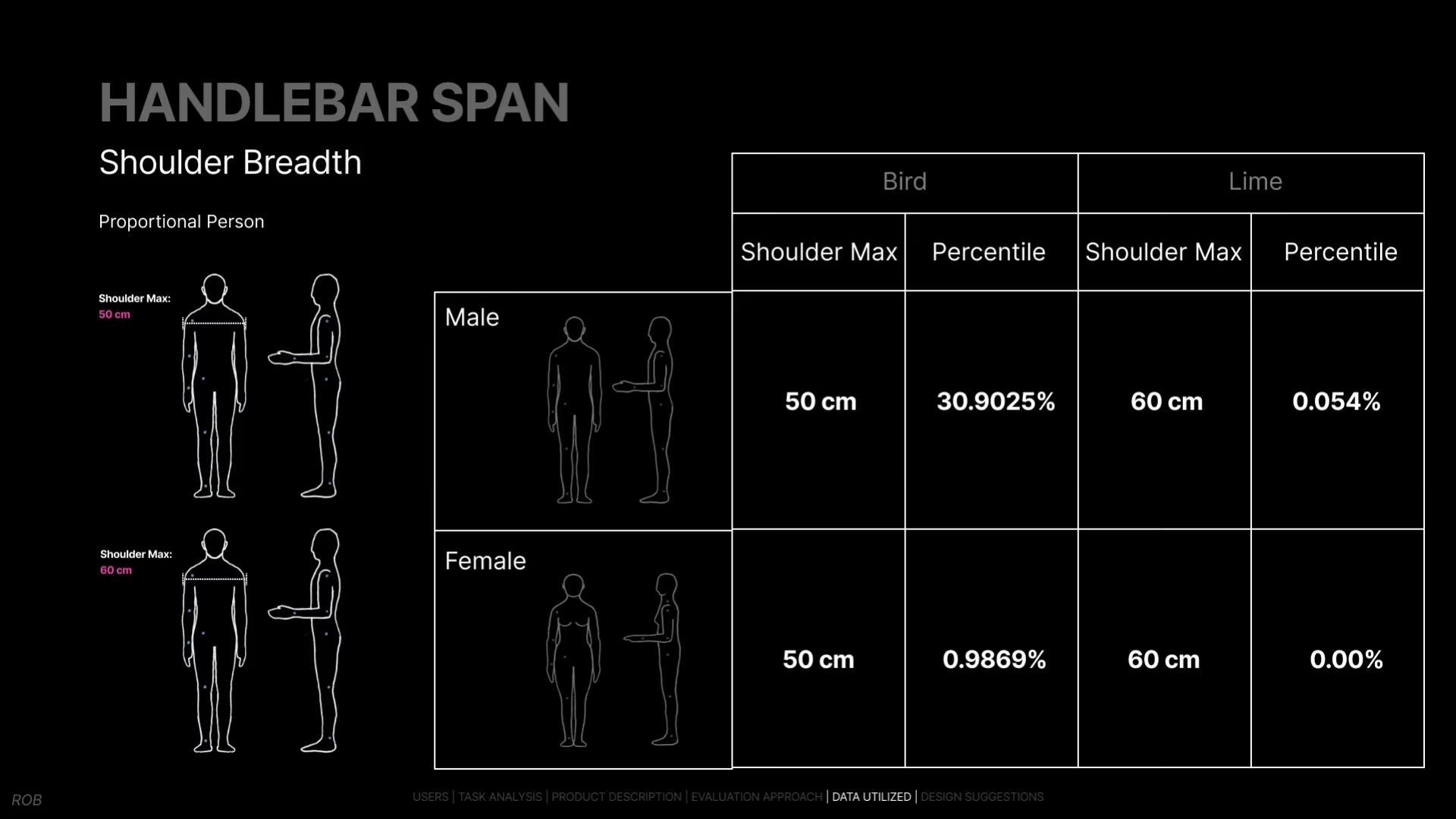
Bird's narrower span is the shoulder-breadth problem. Lime's is already fine.
Process Book
The full 37-page assessment
Six of us measured two rideshare scooters against real anthropometric data for a Human Factors and Ergonomics course. Everything we turned in is below.
We initialed our own slides in the bottom-left corner. Mine say ROB: handlebar height, handlebar reach, handlebar span, braking ability, and kickstand force.
The pages below are rendered at reading size. For the dense measurement tables, open the PDF — it zooms.
Open the full PDF →Process
Bird Two vs. Lime: anthropometric assessment of both platforms.
Measured real users against anthropometric data across multiple dimensions.
Scored each dimension against the population it excludes; handlebar height had the largest reachable gain.
Three must-have changes — platform width, handlebar height, brake reach — each tied to the population it serves.
What Shipped
3
Must-have recommendations
15.57M
Net riders served by +5cm handlebars
2
Scooters assessed
Anthropometric assessment of Bird Two and Lime scooters against real user population data, structured around the deck's three must-have design requirements. Platform width fails against 95th-percentile foot size — up to 160% of platform width for two feet. Handlebar height fails against stature, built for a 165.1cm ideal rider, the 6th percentile of men. Brake lever reach fails against grip span, positioned beyond an 8.76cm 2.5th-percentile grip. The handlebar-height fix carries the clearest population math: +5cm serves 14,936,529 more men and a net 636,921 more women, at a cost of 322 women slightly worse off.
- Identified three must-have design changes, each anchored to a different anthropometric dimension: foot size, stature, and grip span
- Quantified the handlebar-height fix: +5cm serves 14,936,529 more men and a net 636,921 more women, against 322 women worse off
- Measured platform utilization at 160% of width for a 95th-percentile male's two feet on Bird's narrower deck
- Measured brake lever reach at 9–11cm against an 8.76cm 2.5th-percentile grip span, requiring 5.5–6kg of pull force
What I Learned
Human factors research produces its most useful findings when you ask which intervention has the highest leverage — not which problem is most severe, but which fix moves the most people at the lowest cost. The handlebar-height finding makes that case clearly: +5cm serves 14,936,529 more men against only 322 women worse off, an asymmetry that argues for itself. The method lesson generalizes past that one number. Exact percentiles are what turn observations into design briefs. '160% of platform width' is a spec; 'the deck feels narrow' is not. An 8.76cm grip span next to a 9–11cm brake lever is a spec; 'small hands struggle with the brake' is not.
What this demonstrates
More Work
All projects →