
Phocus
The phone is not the problem. The absence of a deliberate ritual for putting it down is.
71–96
Times the average American checks their phone, per day
3–6 hrs
Daily phone time, for 68% of Americans
3
Ambient states: green / red / blue
Qi + sensor
Placing the phone starts the session
The average American checks their phone between 71 and 96 times a day, and 68% spend three to six hours a day on it. The deck frames the problem as two words — wasted time and a lack of focus — and builds a design statement to address both: how might we help people understand their distraction time while helping them optimize their work time? The answer combines two existing behavior techniques rather than inventing a new one: the pattern interrupt (an environmental change that snaps someone out of a habit) and the Pomodoro method (timed work sessions with built-in breaks).
My Role
Solo designer. Behavioral-technique research, interaction design, hardware-software system design, physical prototyping (cardboard through hand-cut kerf-bent plywood), electronics integration (Qi charger + load sensor + RedBoard).
The Problem
71 to 96 times a day
The deck opens with the numbers: the average American checks their phone between 71 and 96 times a day, and 68% spend three to six hours a day on it. The framing that follows isn't 'bad screens' — it's wasted time and a lack of focus, distilled into a design statement built to hold both: how might we help people understand their distraction time while helping them optimize their work time?
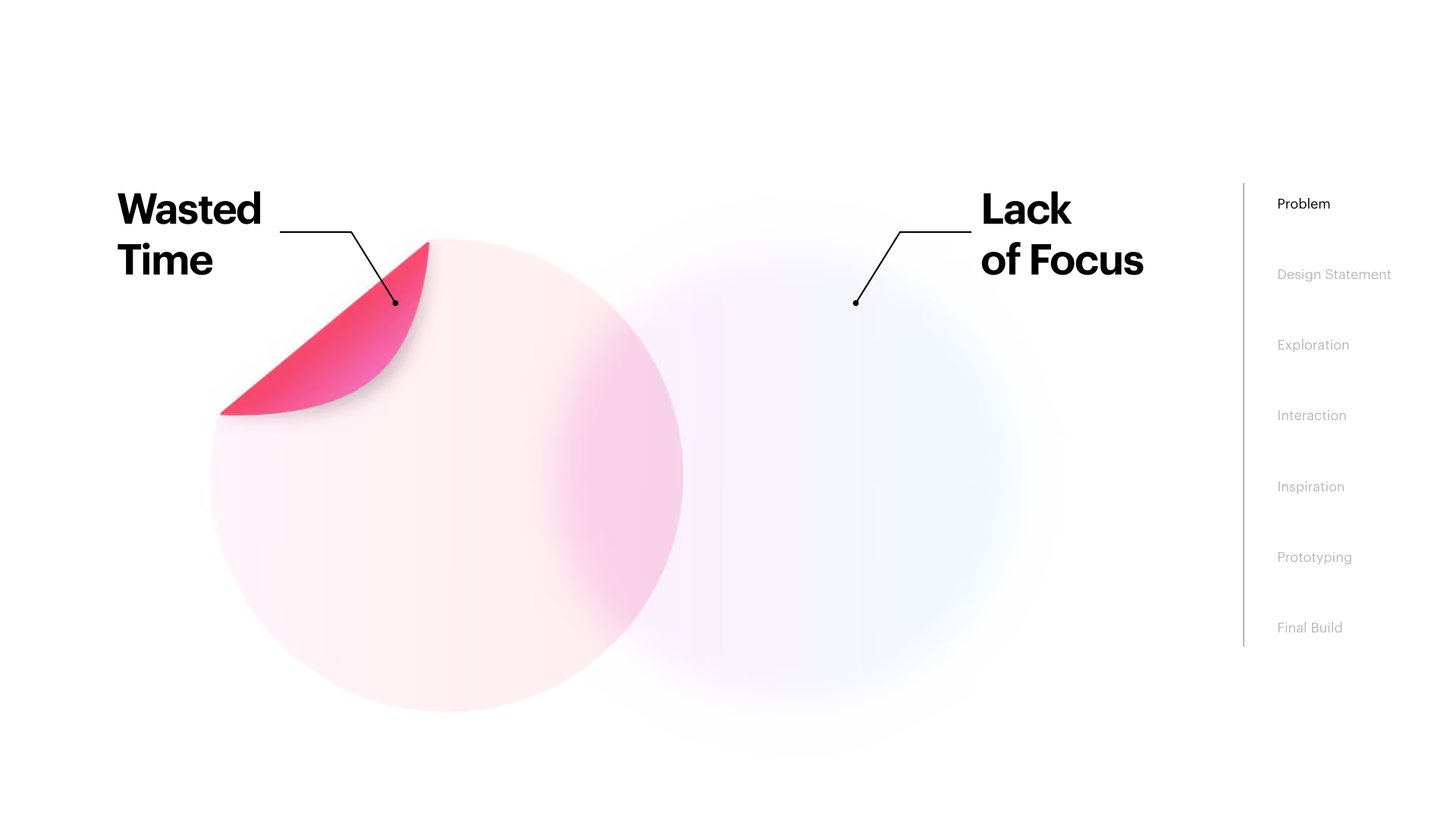
The problem, split in two: time being peeled away, and focus literally blurred.
The Concept
Two existing techniques, combined
Neither half of the idea is new. A pattern interrupt is an environmental change — a sudden shift in light, in this case — that snaps someone out of a habit loop. The Pomodoro method is 25 minutes of work and a 5-minute break, repeated, with a longer break every four rounds. The deck's contribution is pairing them: place your phone down, and the environment itself starts — and can break — a Pomodoro session.
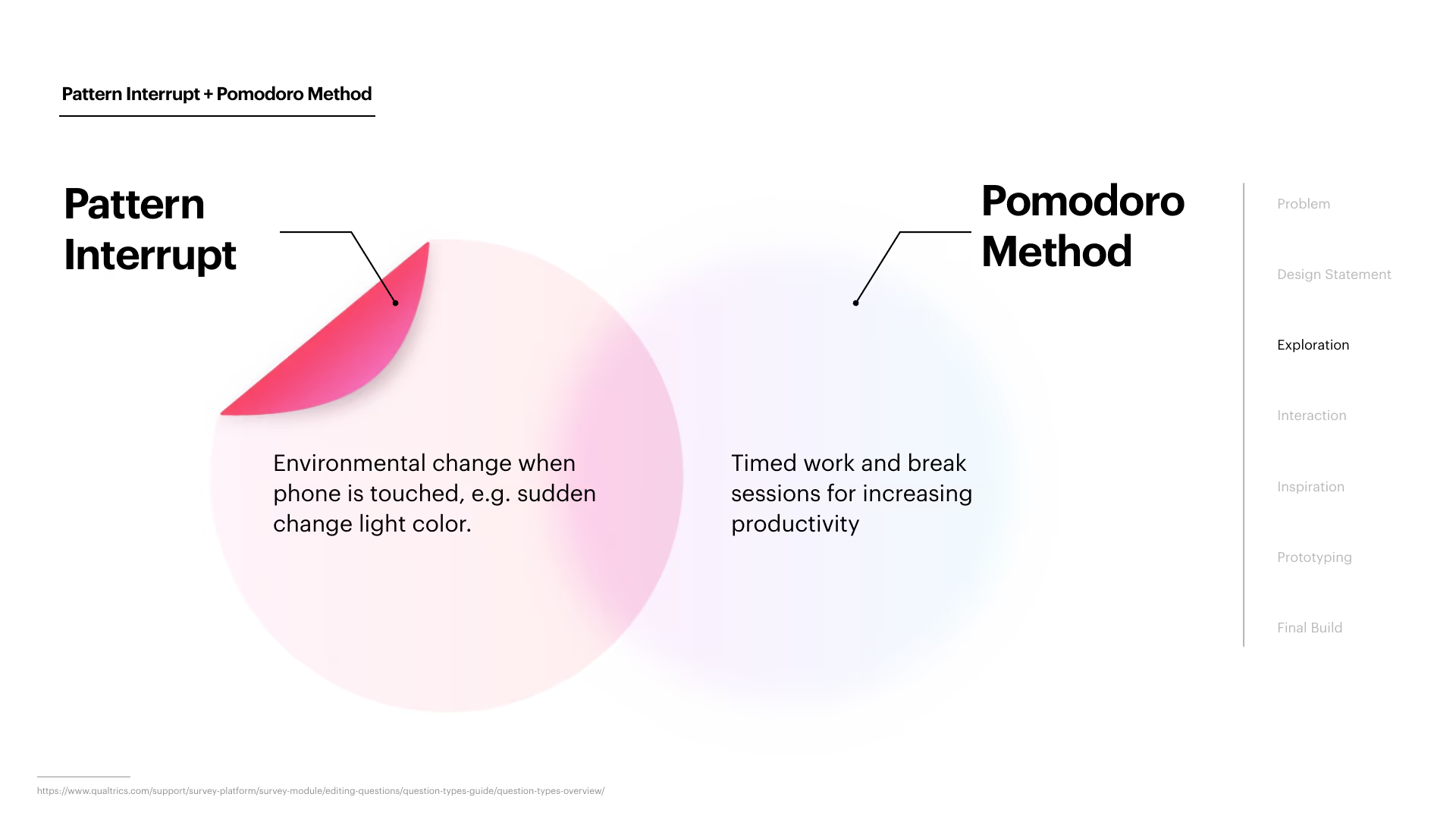
The same graphic as the problem slide, relabeled — pattern interrupt answers wasted time, Pomodoro answers lack of focus. One technique per half of the problem.
The Interaction
The storyboard is the whole interaction model
Six panels tell the entire story: the user feels the pull toward a distraction and places their phone on the charger instead, which starts the timer. Green means the session is running. Pick the phone up early and the light turns red and the timer stops — the pattern interrupt firing at the moment of the slip, prompting the user to put the phone back. Put it back and the session resumes. Blue means the round is done and a break has been earned.
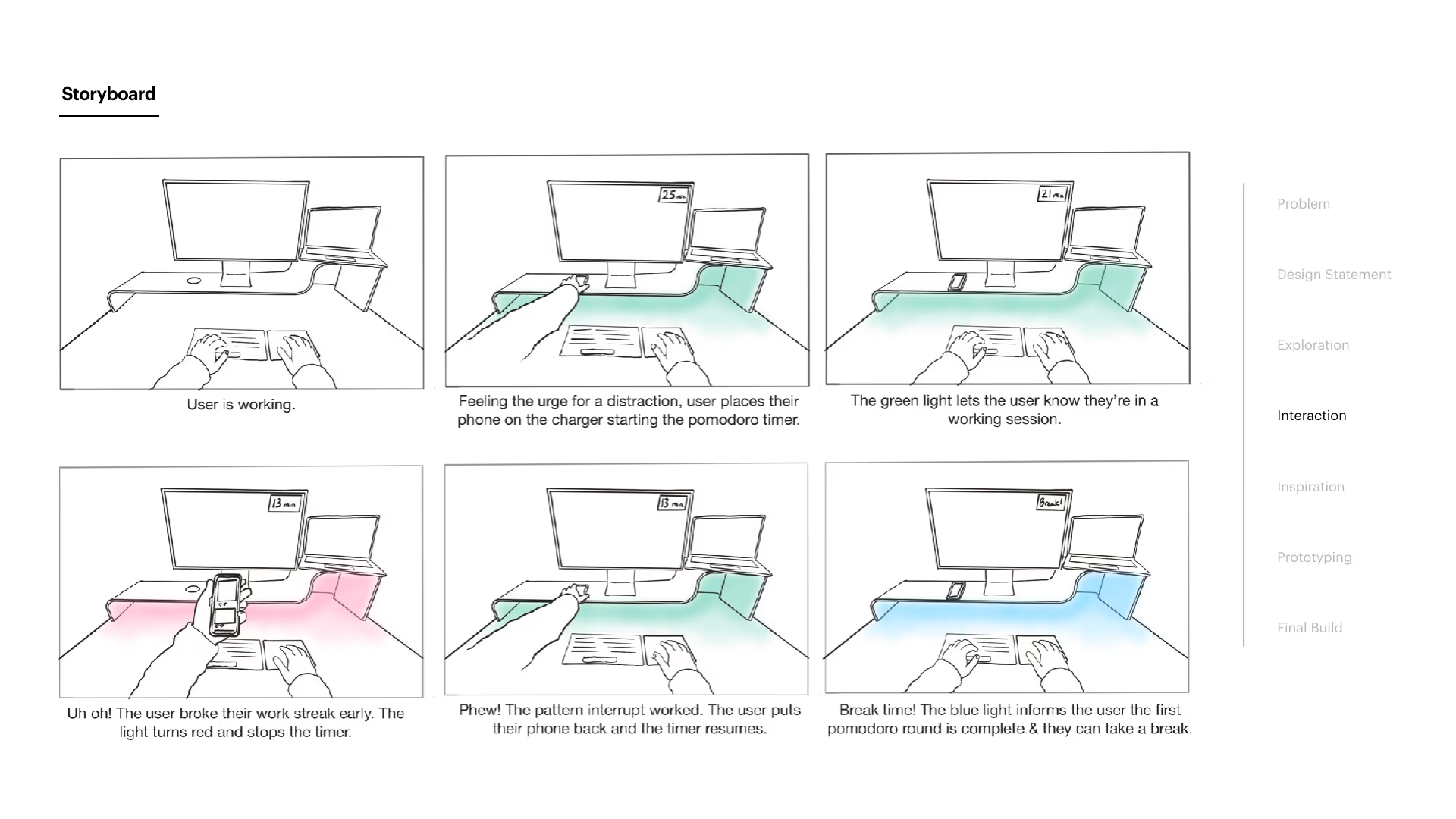
Green while you work. Red the moment you break the streak. Blue when the break is earned.
Material & Form
From cardboard to a bent-plywood stand
The form went through cardboard mockups first, then kerf-cut bending tests — narrow saw kerfs, cut by hand, that let plywood flex into a continuous curve without breaking. The S-curve was the hard part: a single bend is straightforward, but reversing it in the same piece means fighting the kerf spacing at both radii. An inspiration board of old-growth forest photography sits behind the form direction: an organic curve that reads as a desk object, not as an electronics enclosure sitting on top of one.

The deck's inspiration board, filed under Inspiration between the storyboard and the prototypes.
The System
Qi charger, load sensor, RedBoard: one gesture, one signal
Placing the phone does two things at once: it starts charging over Qi, and a load sensor registers the placement as a session start. A RedBoard microcontroller runs the timer logic and drives the ambient light. After the V1 build, the shell went through a level check and a weight test, and the circuit went through sensor testing and workarounds on a breadboard before the final build.
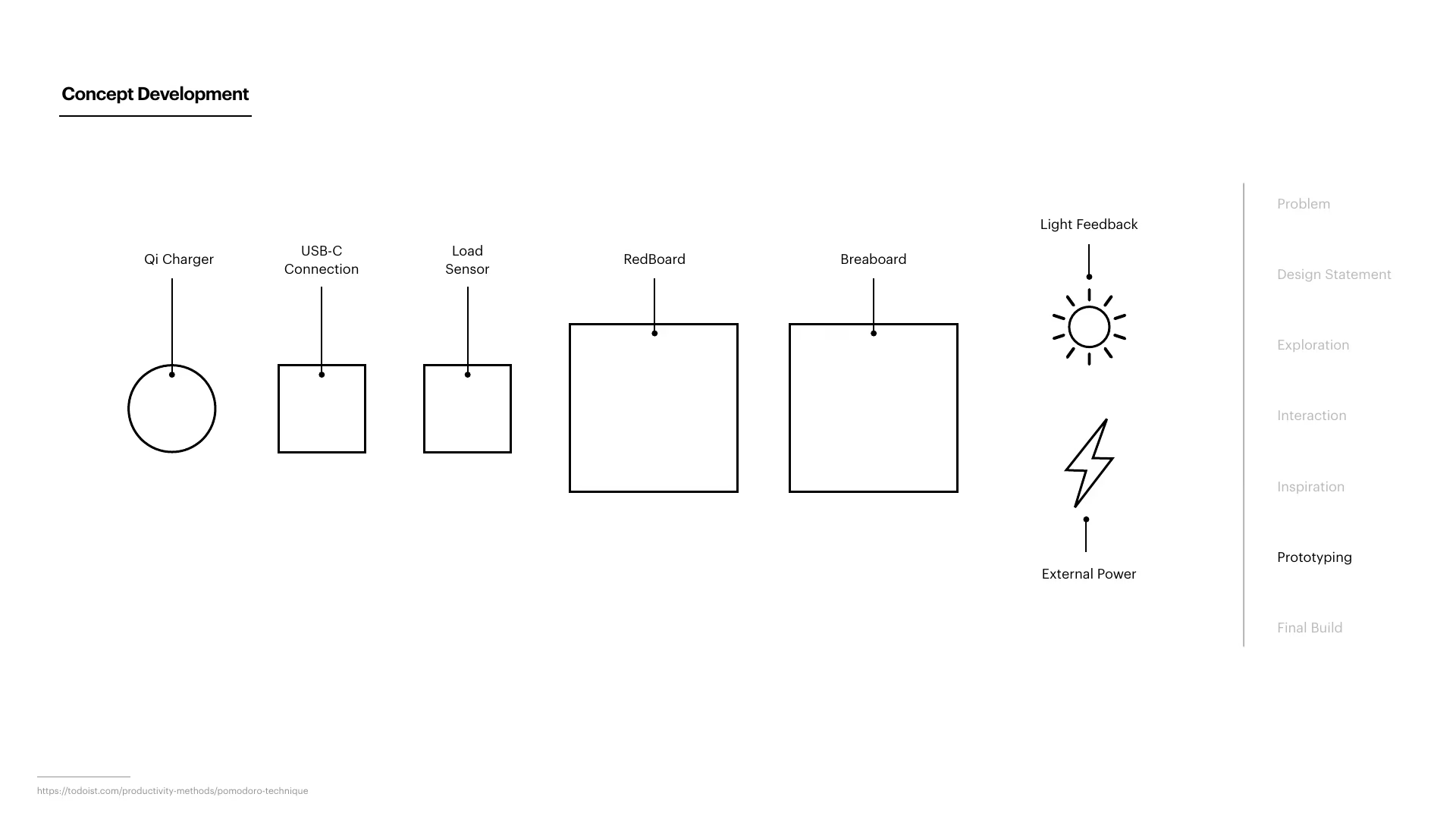
The parts list behind one physical gesture.
Process Book
The full 25-page deck
This is everything I turned in for Studio 2, start to finish: the problem, my design statement, the exploration behind it, the interaction model, the inspiration, the prototyping, and the final build.
I built Phocus on my own, but I leaned on a lot of people to get there. Lissette Romero, Julio de Pereda, Daniel Vandersteen, Andrew Scialabba, Xavier Simonelli, Liz Kelly, Kevin Park, and Ben Mayo were classmates in the program who gave me advice, a hand in the shop, or a round of user testing. Tripp Edwards and Noah Posner taught me, and Alex ran the lab.
The pages below are rendered at reading size. For the dense stat and diagram pages, open the PDF — it zooms.
Open the full PDF →Process
71–96 phone checks a day. Pattern interrupt + Pomodoro pointed at a physical fix.
Placing the phone on the charger starts a Pomodoro session; picking it up early breaks it — red confirms the break.
Cardboard mockups, then kerf-cut bent-plywood tests toward the final curved shell.
RedBoard + load-sensor circuit, weight and level testing, then the final bent-plywood build.
What Shipped
3
Ambient states
25+5
Pomodoro minutes, work + break
3
Integrated systems (Qi, sensor, controller)
A hardware-software focus system that pairs two existing behavior techniques — the pattern interrupt and the Pomodoro method — into one physical object: placing the phone on the Qi charger starts a 25-minute session and turns the ambient light green; picking it up early turns the light red and stops the timer; a completed round turns it blue for a break. Built as a Studio 2 final project through cardboard mockups, kerf-cut bent-plywood tests, and a RedBoard-driven load-sensor circuit.
- Combines two existing behavior techniques — the pattern interrupt and the Pomodoro method — into a single physical ritual
- The object itself carries no screen — a three-state ambient light (green / red / blue) reports session status, paired with an on-screen countdown
- Qi charging and a load sensor turn the act of placing the phone into the session trigger
- Prototype sequence: cardboard mockups → hand-cut kerf-bending tests → finished plywood build, driven by a RedBoard circuit
What I Learned
The deck's own numbers made the case before any design work started: checking a phone 71 to 96 times a day isn't a willpower failure, it's the absence of a designed moment for putting it down. Pairing a pattern interrupt with the Pomodoro method gave that moment a mechanism — placing the phone is the ritual, the ambient light confirms the commitment, and the load sensor detects when someone breaks it. Material followed the same logic as the interaction: cardboard mockups tested proportion fast and cheap, hand-cut kerf-bending tests worked out how far plywood could flex before it split — and how to reverse that bend into an S-curve without losing it — and the built shell went through a level check and a weight test before the final build. The result reads as a desk object first — a stand worth having regardless — with the electronics as the part you stop noticing.
What this demonstrates
More Work
All projects →