
Biomimicry Jacket
A feather and platypus fur taught us how to waterproof a jacket — not as metaphor, as structural reference.
~120°
Feather contact angle (hydrophobic)
15–20K
Platypus hairs per sq inch
0
PFC chemicals used
Structure
Not coating
DWR (Durable Water Repellent) coatings — the industry standard for waterproof jackets — contain harmful PFC chemicals. The question this project started with: does biology have a better answer? A feather's structure alone — with its natural preen oil removed — still repels water, and platypus fur traps air in a two-layer coat. The design problem was translating that biological structure into a surface a machine can reproduce.
My Role
Mixed-discipline team of five: Ryan Cortes (materials engineering), John Monaghan (nuclear engineering), Lauryn Wright (mechanical engineering), Julie Yan (biomedical engineering), and Rob Stout (industrial design). Biological systems research, microscopy analysis, functional decomposition, material system design, prototype specification and testing. Laser ablation run with HoJin Seo, a lab aide outside the team with access to the equipment.
Problem
Every fix still needs a chemical
The deck's own baseline ranks three current DWR options: 'Bad' — long-chain C8 fluorocarbon treatment, a forever chemical banned by the EPA and phased out of many products around 2013; 'Better' — shorter-chain C6, which still carries trace PFOAs and remains a hazard; and 'Best' — Teflon EcoElite, 60% renewable and designed to work with existing fluorinated finishes, which lowers the carbon footprint but doesn't eliminate it. Even the industry's best current option is still a chemical treatment.
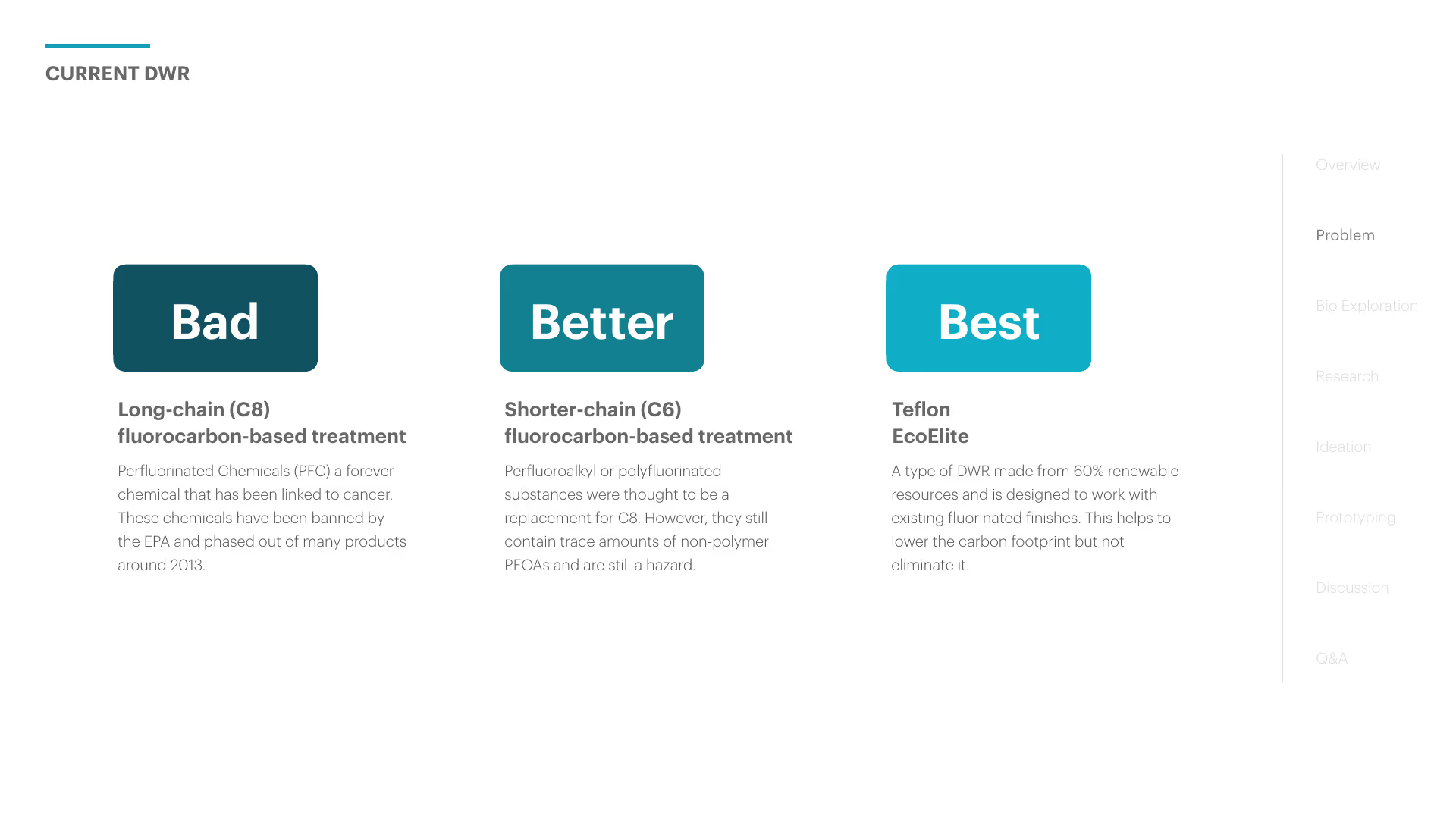
The industry's own best option still works with fluorinated finishes.
Bio Exploration
Five organisms, one shared function
Before narrowing to a feather, the research scanned five organisms against the same requirement set: mountain goat horn (impact absorption via radial collapse of laminated tubules), copepod teeth (a silica cap over a resilin undercap), platypus fur (a two-layer coat trapping an insulating layer of air), and the cavitation mechanisms behind mantis shrimp and pistol shrimp claw strikes. Platypus fur and feather structure were the two that actually matched the problem — repelling water through geometry, not through impact resistance or cavitation.
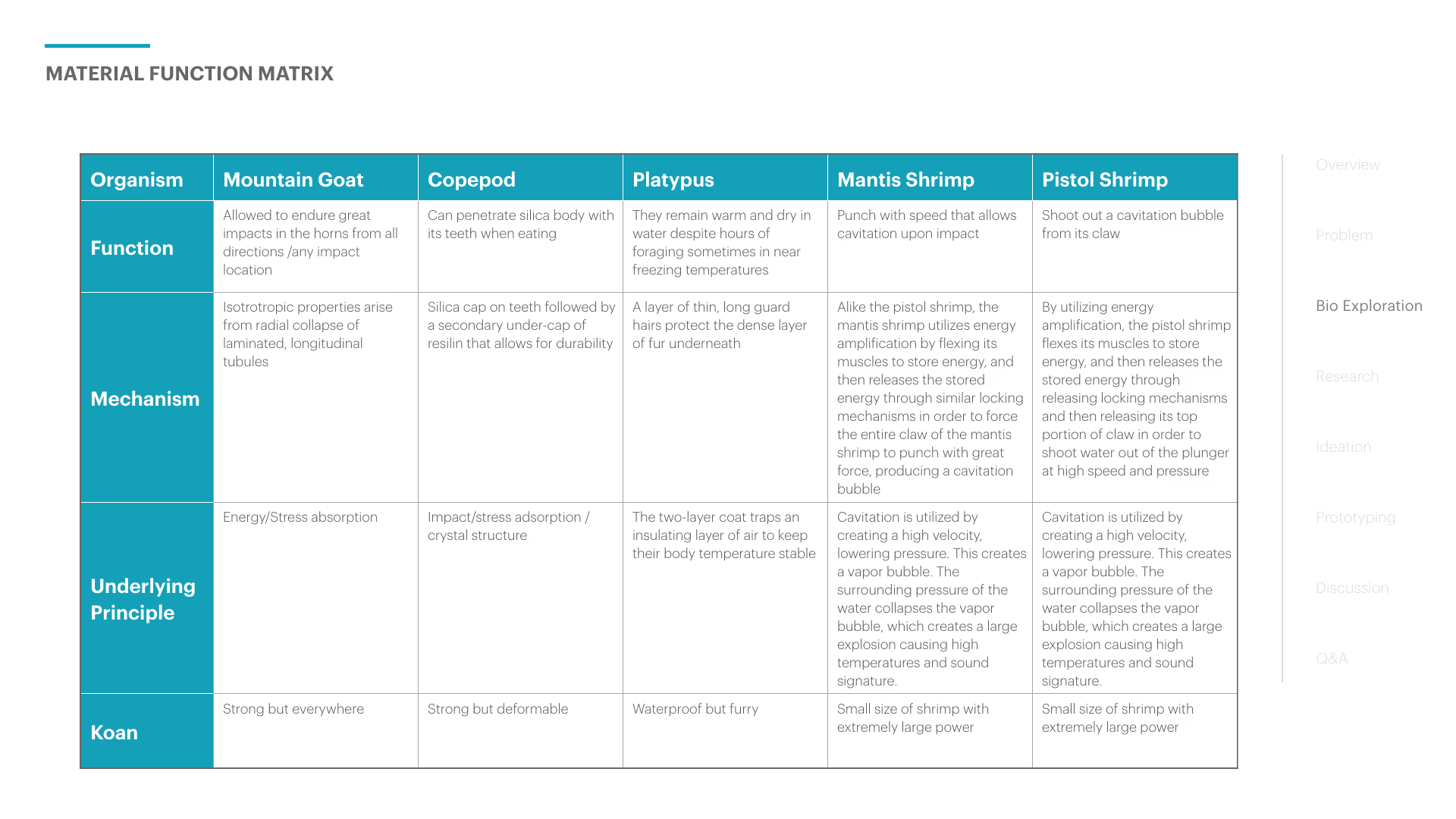
The field of candidates. The platypus carried the water story forward; the feather joined with its own matrix two pages later.
Functional Decomposition
Mapping Gore-Tex to two biological equivalents
Gore-Tex keeps water out with an exterior hydrophobic polymer coating over a stretched PTFE membrane, and keeps the wearer dry inside with a separate hydrophilic coating that wicks moisture away. The decomposition diagram maps both jobs onto biology: platypus fur's two-layer coat — a fine, tightly packed undercoat plus long guard hairs, roughly 15,000–20,000 hairs per square inch of skin — traps the insulating air layer. Feather structure — barbs, barbules, and preen oil redistributed during grooming — creates the surface tension and contact angle a bird needs for flight-ready waterproofing.
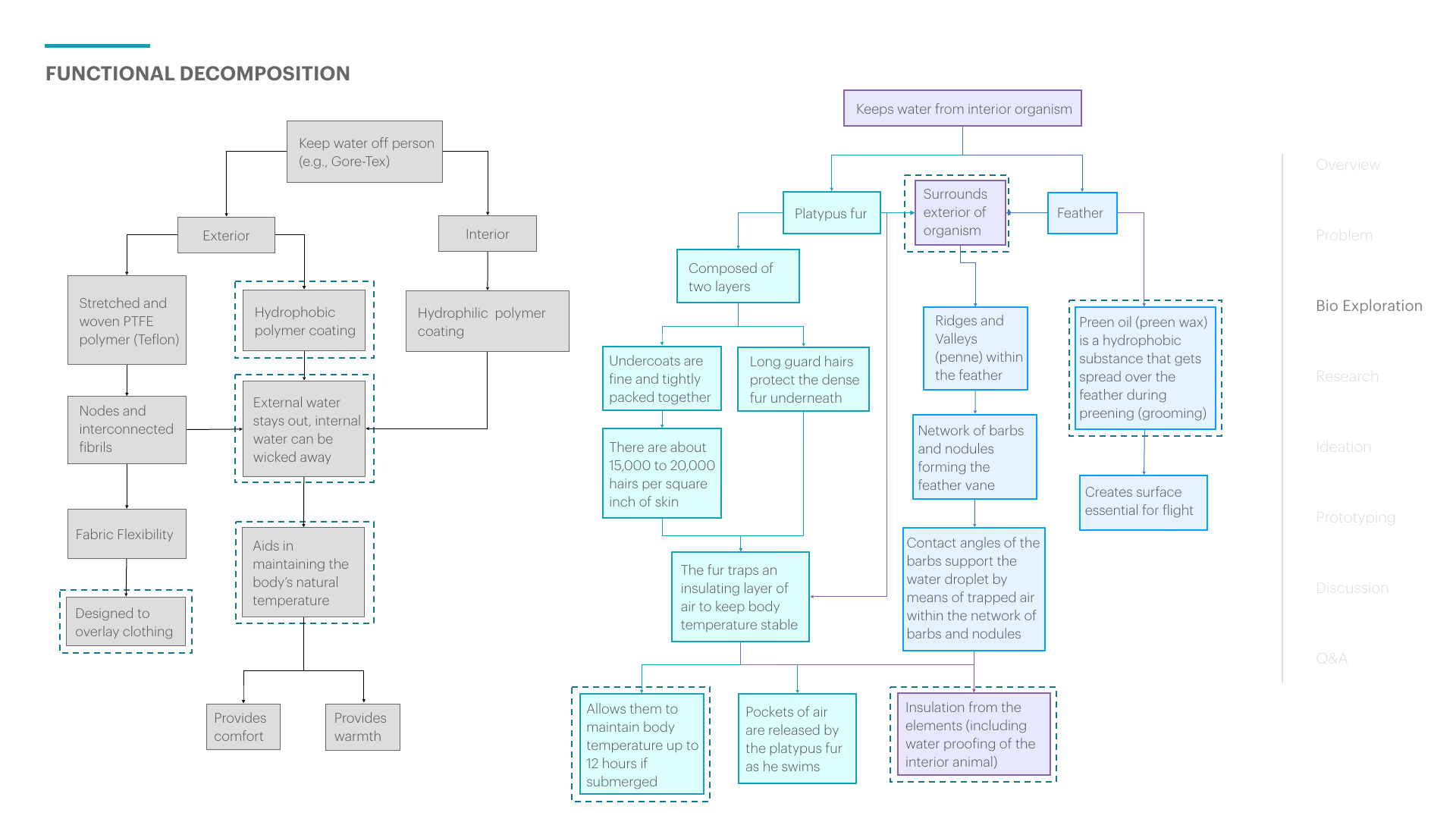
Gore-Tex's two jobs — keep water out, keep the wearer dry — mapped onto platypus fur and feather structure.
Research
A cited target: ~120°
Bormashenko et al. had already measured this: with preening oil removed, a feather's structure alone still produces a water contact angle of approximately 120° — the more obtuse the angle, the more hydrophobic the surface. That figure is cited research, not a measurement the team took, and it became the project's target for 'strongly hydrophobic.'
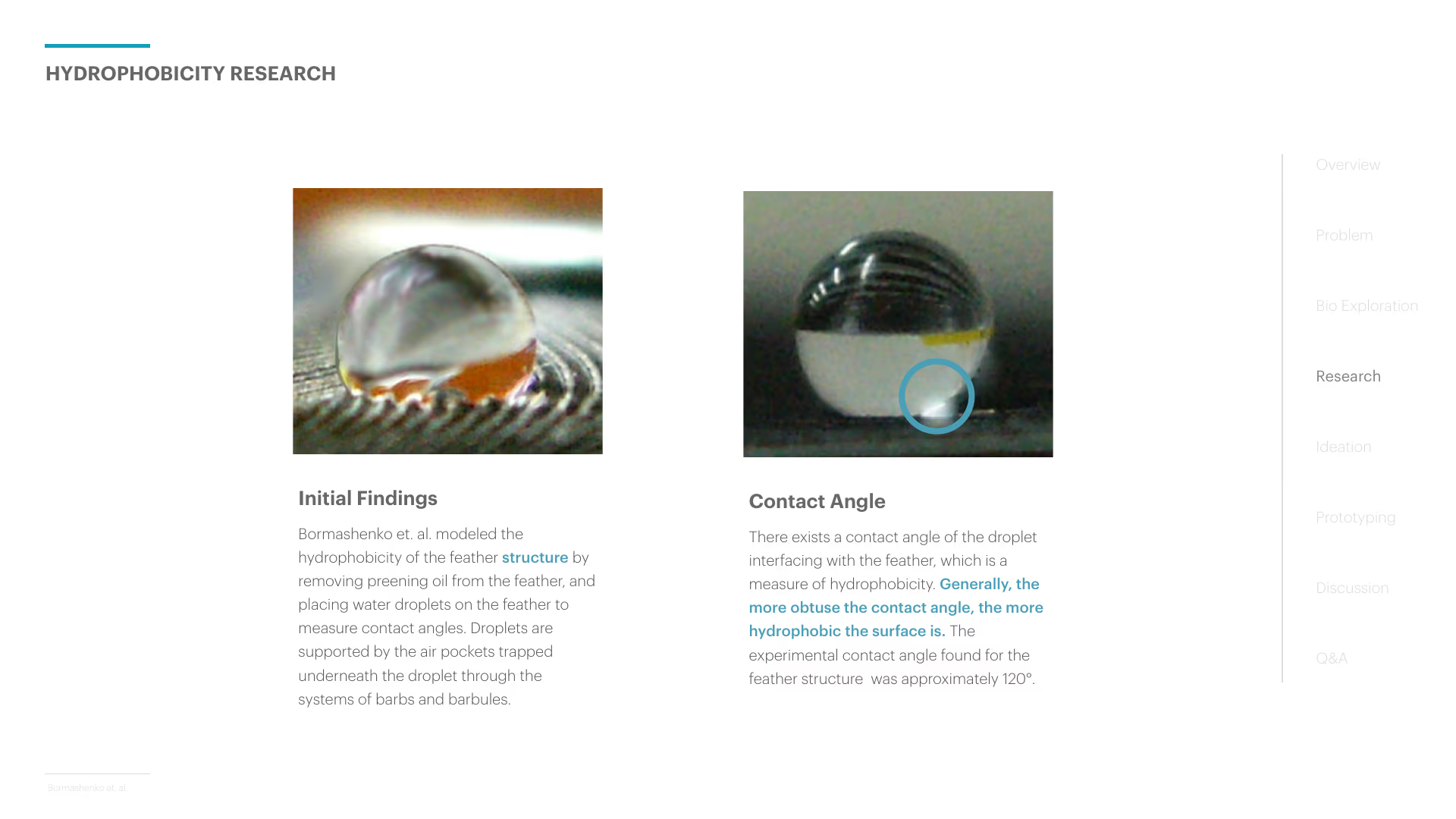
The cited research the project's ~120° target came from.
Measurement
Then the feather itself, under the scope
The team's own microscopy measured the feather's geometry at three magnifications: barbs spaced roughly 300–550μm apart and about 65μm wide, with barbules spaced 10–15μm apart. Those dimensions — not the citation — became the pattern a laser would later need to reproduce.
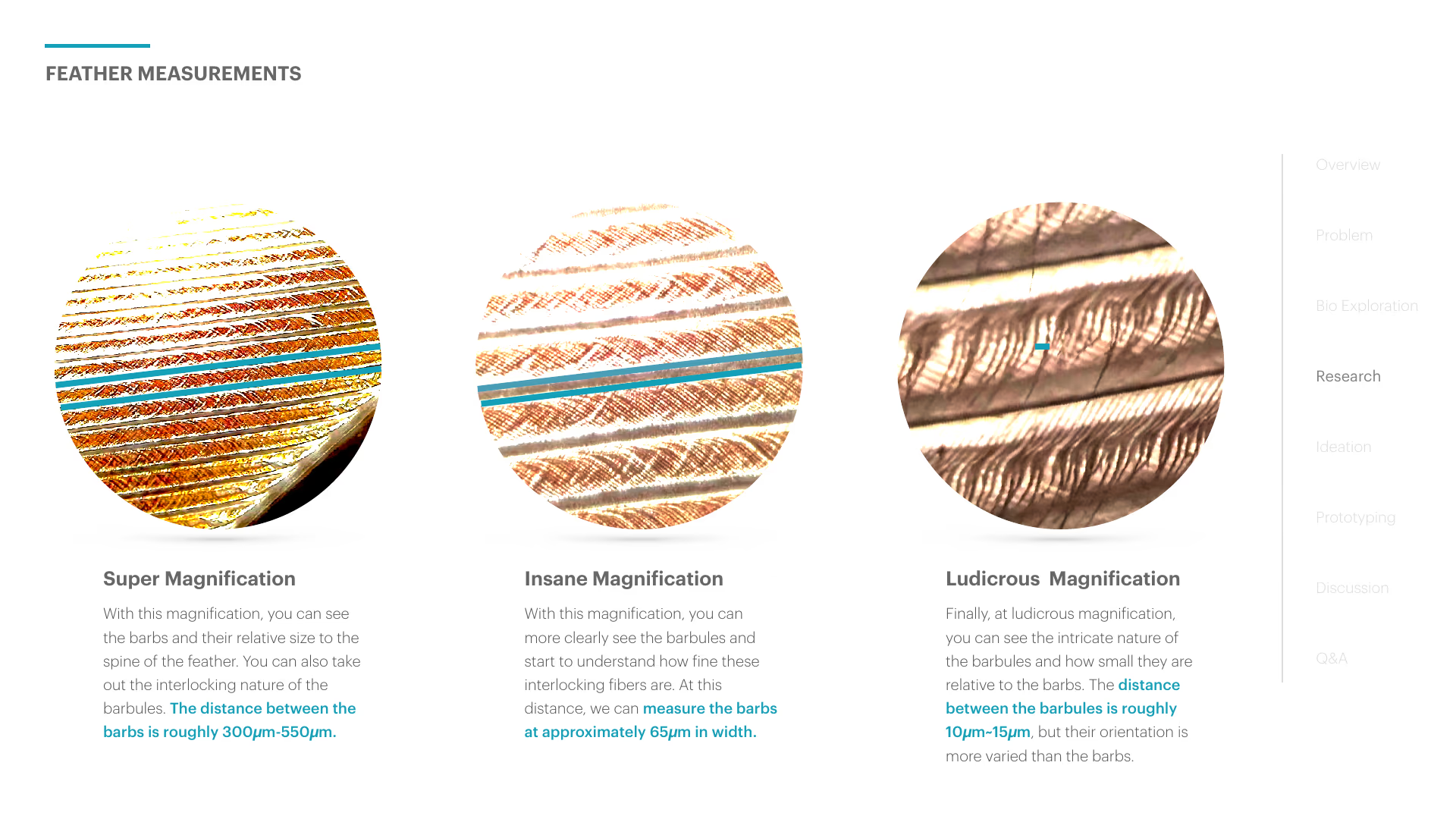
Three magnification passes on a real feather, measuring the geometry a laser would later have to reproduce.
Prototype
A laser-ablated pattern, tested against a plain control
With fabrication help from nano-tech lab collaborator HoJin Seo, the barb pattern was laser-ablated into PDMS silicone test plates, then measured under a microscope and tested with water. Tilting a droplet on the untextured surface produced only a modest contact angle. Tilting the same droplet on the textured surface produced a visibly more extreme angle — direct evidence the structure itself, not a coating, was doing the work.
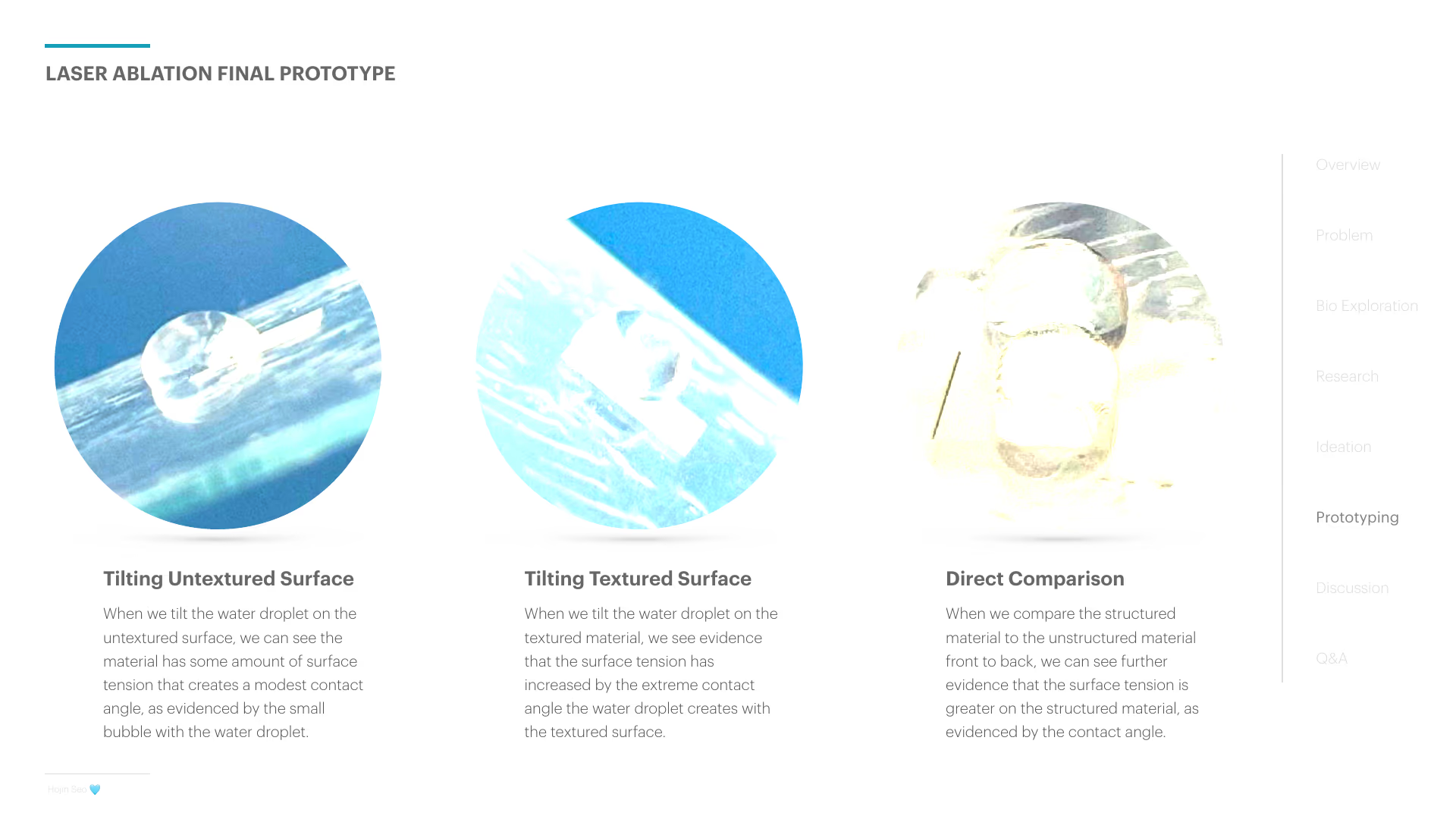
The structural claim, tested: the textured surface held a wider contact angle than the plain control.
Process Book
The full 47-page deck
Five of us worked on this for a bio-inspired design course, and I was the only designer in the room. Ryan Cortes came from materials engineering, John Monaghan from nuclear, Lauryn Wright from mechanical, and Julie Yan from biomedical. The whole thing runs below: the problem, the biology, the research, the ideation, the prototyping, and where we landed.
We could not have prototyped any of it without HoJin Seo. He wasn't on our team or even in the class. He was a lab aide with access to a laser we never could have gotten near, and he made the silicone plates and ran the ablation for us.
The pages below are rendered at reading size. For the dense tables and citations, open the PDF — it zooms.
Open the full PDF →Process
Treatment or structure? DWR coatings still need PFCs. Does biology have a better answer?
Five organisms scanned for useful mechanisms; platypus fur carried forward, the feather added with its own matrix.
Feather barb and barbule geometry measured under magnification; contact angle target (~120°) set from cited research.
Laser-ablated the barb pattern into silicone test plates and compared water behavior against an untextured control.
What Shipped
~120°
Target contact angle
15–20K
Hairs/sq inch (platypus)
3
Magnification levels studied
0
PFCs in the design
A biomimicry study that made it all the way to a fabricated test article: measured feather geometry, a cited performance target, and a laser-ablated silicone surface that held a visibly wider water contact angle than an untextured control — hydrophobicity from structure, not chemistry. Applying the structure to fabric is named in the deck as the next step. Functional decomposition ensured the biological system addressed all Gore-Tex functional requirements, not a simplified subset.
- Structure-driven hydrophobic surface derived from feather and platypus biology — no PFC chemistry
- ~120° contact angle target set from cited hydrophobicity research (Bormashenko et al.), not an in-house measurement
- Functional decomposition verified biological system covers all Gore-Tex functional requirements
- Original microscopy measured the feather itself at three magnifications — barb spacing, barb width, and barbule spacing (not sourced from literature)
- Laser-ablated the barb pattern into a silicone prototype and compared it: the textured surface held a visibly wider water contact angle than an untextured control
What I Learned
Biomimicry works as an engineering method when you study the biology at the level of precision that engineering requires. A feather waterproofs through geometry — barbs and barbules realigned by preen oil during grooming, creating the surface tension a bird needs for flight. Citing a measured contact angle (Bormashenko et al., ~120°, on pigeon feathers) gave the project a concrete target instead of a vague inspiration, and a laser-ablated prototype tested it directly: the textured surface held a wider contact angle than an untextured control. The deck is honest about the cost of that result — its own takeaway notes it took a six-figure machine to reproduce the structure of the organism, which is the biomimicry-versus-manufacturability tension in one sentence. The functional decomposition step mattered just as much — mapping Gore-Tex's functional layers to biological equivalents before proposing an alternative meant the biological system was being compared on equal terms, same requirements, different mechanisms.
What this demonstrates
More Work
All projects →