
H2GLO
A solar-powered water purification and light pack for disaster zones — icon-only interface, built for someone using it for the first time, under stress. European Product Design Award, Gold.
Gold
European Product Design Award
785M
People without clean water
3-stage
Filtration: ceramic + carbon + UV
8800mAh
Battery capacity
Each year an average of 25.3 million people are displaced by sudden-onset disasters, and roughly 100,000 die in the course of them — in part because humans can only go three days without water, and organized relief takes days or weeks to reach a disaster zone. 785 million people worldwide already lack basic drinking-water access before a disaster ever hits, and 1 in 4 healthcare facilities lack it too. The team's framing question: 'design a system for delivering clean drinking water and evening light to victims of natural and human disasters' — as both a utility and a comfort source, for the gap between when the power goes out and when relief arrives.
My Role
Team of three, all Georgia Tech Master's of Industrial Design: Maggie Johnston, Andrew Melissas, and Rob Stout. Product concept, filtration system design, solar integration, icon-based interface design, structural prototyping.
The Problem
Water and light, in the same traumatic gap
785 million people worldwide already lack basic drinking-water services before a disaster ever hits, and 1 in 4 healthcare facilities lack it too. An average of 25.3 million more people are displaced every year by sudden-onset disasters — floods, storms, earthquakes — that cut off power and water in the same stroke.
The deck's framing question: design a system for delivering clean drinking water and evening light to victims of natural and human disasters, for the traumatic period between when the power goes out and when relief trucks show up.
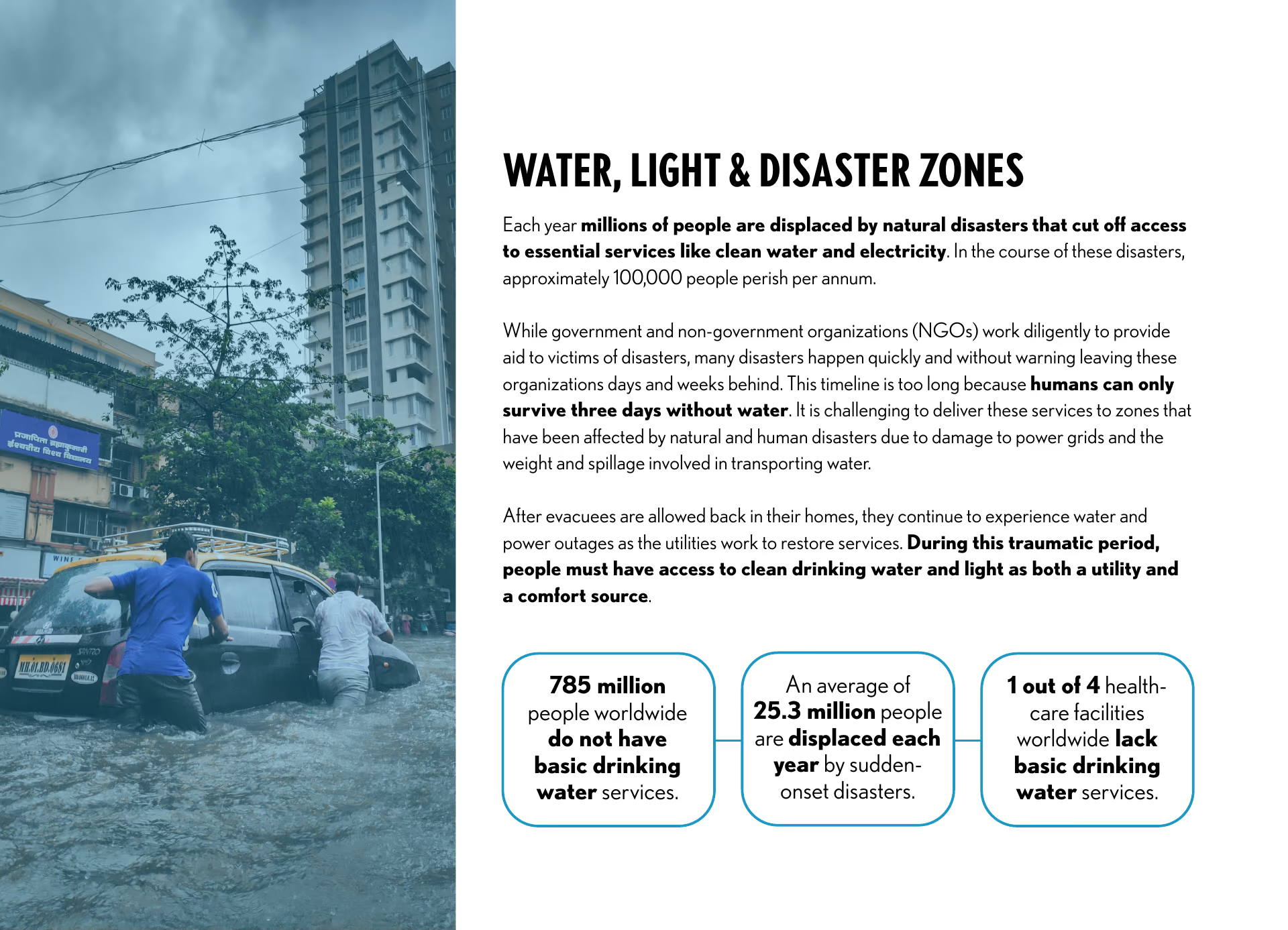
785 million people already lack basic water access before a disaster ever hits.
The Device
One motion to collect, nothing to read
H2GLO is a personal solar-powered water pack: draw water from any source with the attached syringe-style plunger, seal it into the reservoir, and the icon-only interface takes over — no text, so it can't fail for someone who doesn't read the language printed on a label.
The plunger keeps the water intake physically separate from the clean-output spout — a direct answer to a field insight from the design's own research: 'scooping water with the container you drink from contaminates the whole system.'
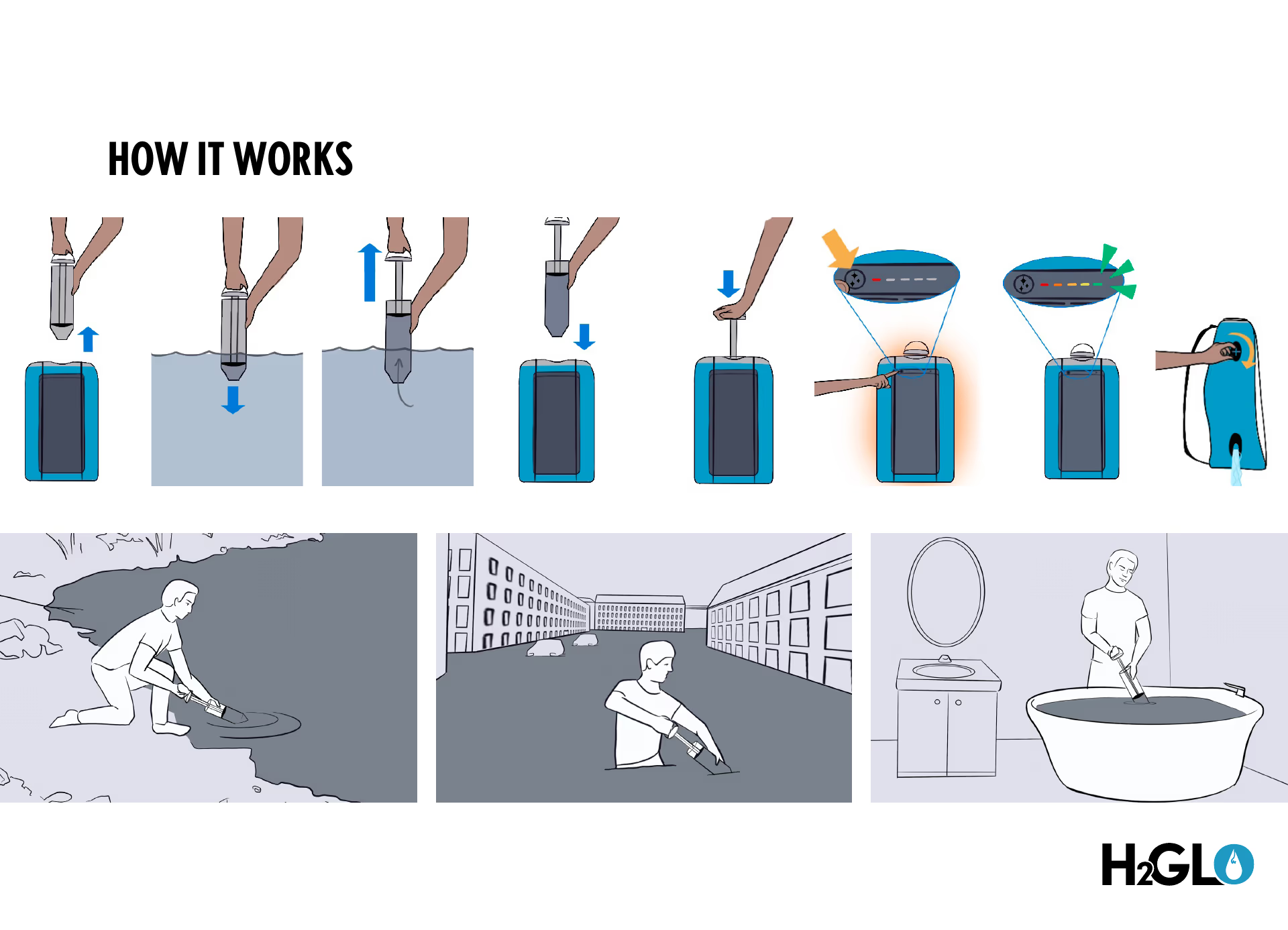
Draw, seal, press. The indicator does the rest — orange while it's working, green when it's safe.
The System
Three filtration stages, one battery, three jobs
Water passes through a ceramic filter (turbidity, sediment, bacteria, metals), then a carbon filter (60-plus chemicals, pharmaceuticals, pesticides, herbicides, and lithium), then UV light embedded in the silicone shell that kills what the first two stages don't — bacteria, viruses, protozoa.
A solar panel charges the 8800mAh battery in 5–11 hours of sunlight. One full charge runs the UV purification cycle four times, or the LEDs for 22 hours. A check valve by the filters keeps water from escaping back out the top of the pack.
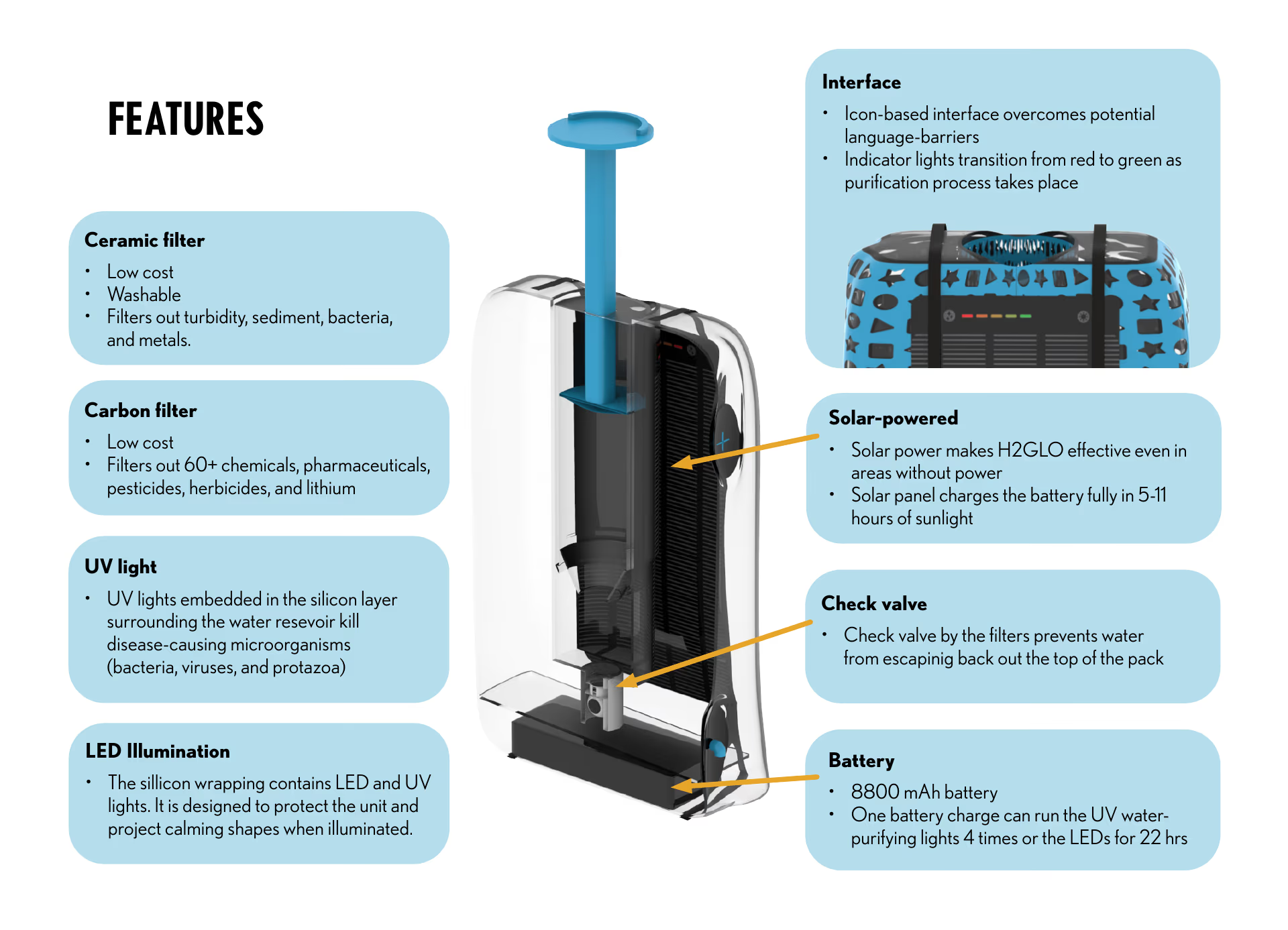
Ceramic, then carbon, then UV — each stage catches what the last one doesn't.
The Comfort Layer
The same shell that filters water lights the night
The silicone skin wrapping the pack embeds LEDs behind a pattern of shapes — it absorbs ambient light by day and glows through that same pattern after dark, on the same battery that runs the filtration.
It's not incidental. The brief named light and water as equally load-bearing from the start — and the field confirmed it: one interviewee noted that Lumi lights had 'made a huge difference' for the people they'd worked with in Haiti. Not water-purifier-plus-a-bonus-light; both are the product.
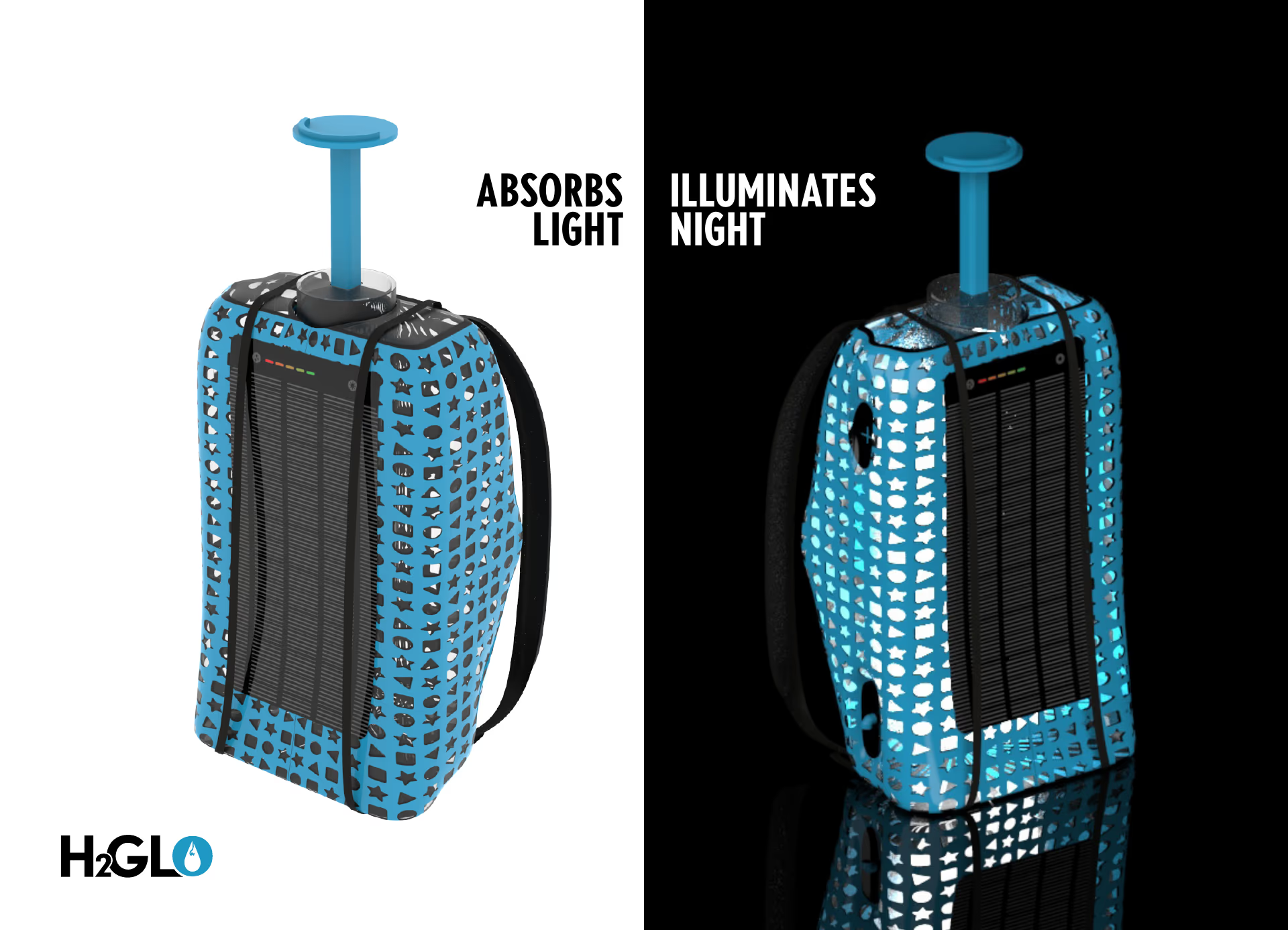
Absorbs light by day, glows by night — powered by the same battery that runs the filter.
What Shaped It
Two field interviews, five sharpened decisions
The early objectives — portable, kills bacteria/viruses/protozoa, energy-autonomous, provides light, durable — came out of problem exploration and a competitive scan of LifeStraw, SteriPen, CamelBak, Grayl, and MSR. Two field interviews then tested that concept against real deployment conditions: a Construction Corps officer, and a colleague who'd worked on water projects in Haiti.
The interviews confirmed and sharpened five design decisions, each paired on the page with the field insight behind it: separate the water intake from the output spout, since a reused scoop recontaminates the system; add indicator lights so a user can confirm the purification cycle actually ran; put real distance between the output knob and the spout, since people often have contaminants on their hands; make the filters replaceable instead of the whole unit disposable; and armor the plastic body in a silicone overcover.
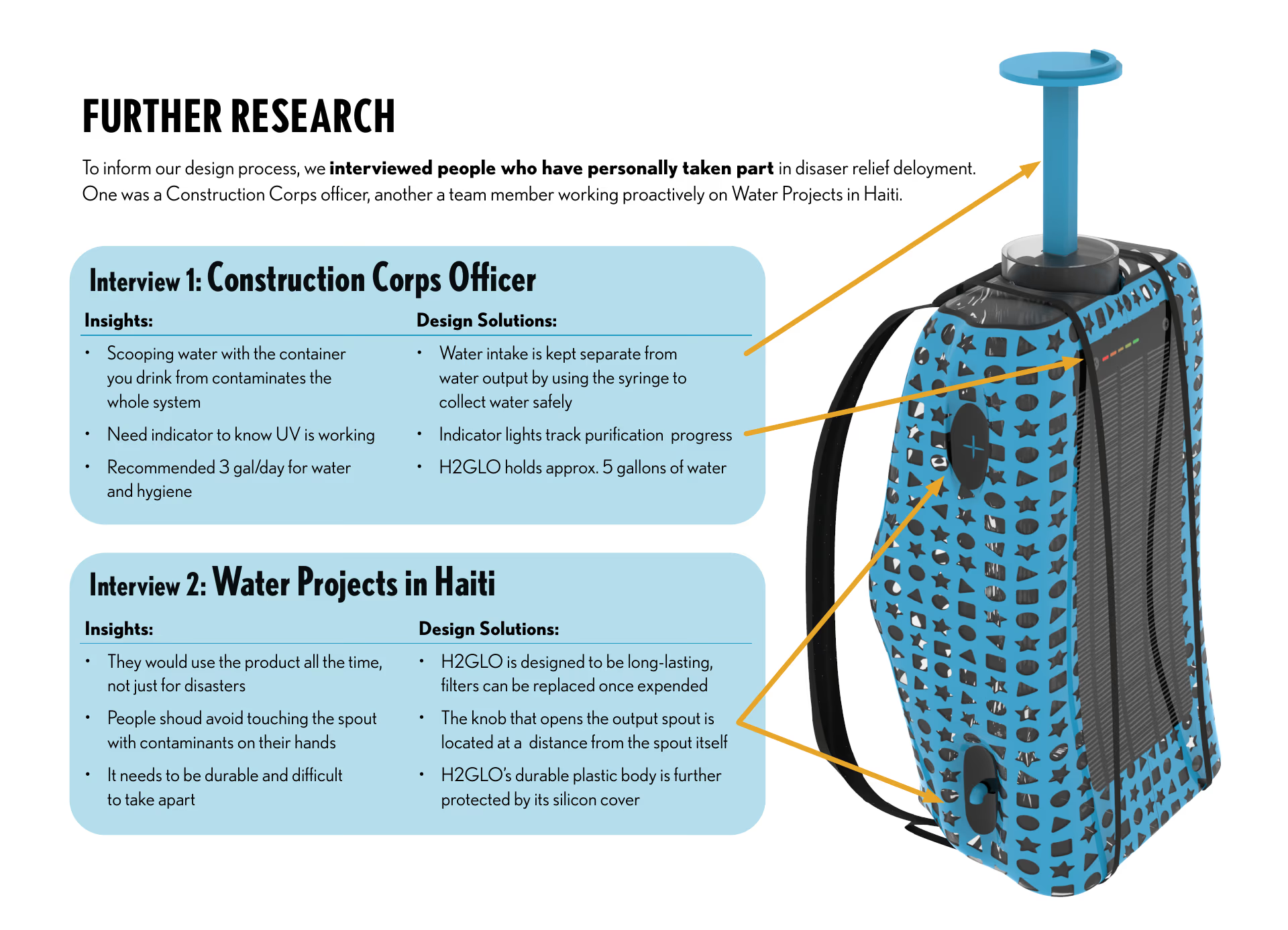
Every arrow on this page points from a field insight to a specific part of the pack.
Process Book
The 8-page European Product Design Award submission
Maggie Johnston, Andrew Melissas, and I built H2GLO together. This is it exactly as we submitted it to the European Product Design Award: the problem, the product, the system behind it, and the light.
The pages below are rendered at reading size. For the dense feature callouts, open the PDF — it zooms.
Open the submission PDF →Process Book
The 13-page background & research book
Before any of that, we worked through the problem itself: who it happens to, what already exists, what the thing had to do, which filtration methods trade off against each other, whether the solar math even worked, and what form it should take. Then we took it to two people who had done disaster relief. That's this book.
This is the earlier research — the reasoning behind the final submission above. Open the PDF to read the citations.
Open the research PDF →Process
785M people lack basic water access; disasters displace 25.3M more a year, cutting power and water in the same window.
Competitive scan (LifeStraw, SteriPen, CamelBak, Grayl, MSR) plus a solar+UV feasibility calculation set the design space.
A form/function matrix and concept sketches, tested against two disaster-relief field interviews.
Icon-only interface, 3-stage filtration, solar + 8800mAh battery, and an LED-lit silicone shell for comfort at night.
What Shipped
Gold
European Product Design Award
3-stage
Filtration
8800mAh
Battery
0
Words in the interface
European Product Design Award, Gold. A solar-powered water purification and light pack for disaster zones: ceramic, carbon, and UV filtration; an 8800mAh solar-charged battery; and an icon-only interface with no text to fail across a language barrier. Field interviews with a Construction Corps officer and a Haiti water-projects worker tested the concept and sharpened five design decisions — separated intake and output, indicator lights, spout-to-knob distance, replaceable filters, and a protective silicone overcover.
- European Product Design Award, Gold — 2021
- 3-stage filtration chain — ceramic + carbon + UV — integrated into a wearable pack with a solar-charged battery
- Icon-only interface with no text, refined against a field insight that people often have contaminants on their hands
- 8800mAh solar-charged battery (5–11 hr full charge) powers filtration and doubles as ambient LED illumination, absorbing light by day and glowing at night
What I Learned
The filtration technology — ceramic, carbon, UV — already existed. The harder design problem was the deployment gap: something that works without training, for someone who may have never seen it, possibly with contaminated hands. Early objectives came from problem exploration and a competitive scan against LifeStraw, SteriPen, CamelBak, Grayl, and MSR; the icon-only interface and the day/night LED shell were part of the initial concept, not an afterthought. Two field interviews — a Construction Corps officer and a colleague who'd worked on water projects in Haiti — then tested that concept against real deployment conditions, confirming and sharpening five decisions: separating intake from output so a reused scoop can't recontaminate the system, adding indicator lights so a user can confirm the cycle ran, spacing the output knob away from the spout, making filters replaceable, and armoring the body in silicone. The Haiti interview also surfaced something a spec sheet wouldn't have: Lumi lights had 'made a huge difference' for the people they'd worked with — field confirmation that H2GLO's light isn't a feature bolted onto a water filter; it's named in the brief alongside the water.
What this demonstrates
More Work
All projects →