
Webex Strategy
The team ran VRIO on Webex's own strengths and it came back negative — valuable, but not rare, not a moat. The five-pillar strategy that followed had to work without one.
Not rare
VRIO's own verdict on Webex's advantages — competitive parity, not a moat
'old'
Webex's top word in the deck's own sentiment survey
5
Strategy pillars: Targeting, Alliances, Org Alignment, Bundling, Rebrand
3
Personas exposing the targeting gap: Claire, Emma, Weston
The team's own VRIO test said Webex's security and reliability advantages are valuable — but not rare. "Competing on feature quality," the analysis concluded, which terminates at competitive parity, not a defensible moat. Layer on Porter's Five Forces (competitive rivalry and buyer power both rated High) and a sentiment survey where Webex's top-of-mind word was "old," and the strategic question stops being about which feature to ship next. It becomes: how do you win a market where the product argument alone doesn't clear the bar the customer applies?
My Role
Team of 5 (Georgia Tech MBA/MID, class of 2023): Charles Breitmayer, Josh Carroll, Tanner Truelove, Mike Soussan, and Rob Stout. Group strategy project — PESTEL, Porter's Five Forces, SWOT, VRIO, competitive pricing analysis, persona development, and a five-pillar recommendation set. The deck doesn't mark individual slide authorship, so specific frameworks below aren't attributed to Rob alone.
Analysis
Four frameworks, one uncomfortable answer
PESTEL, Porter's Five Forces, SWOT, and VRIO — applied to Webex's position against Zoom, Microsoft Teams, and Slack. Porter's Five Forces rated both competitive rivalry and buyer power High: customers have several alternatives that meet most of their requirements (deck page 5).
The VRIO test is the one that mattered most. Webex's reliability and security pass Valuable — but the team's own analysis marked them NOT Rare: "Competing on feature quality." That answer terminates at Competitive Parity, not a defensible advantage (deck page 10).
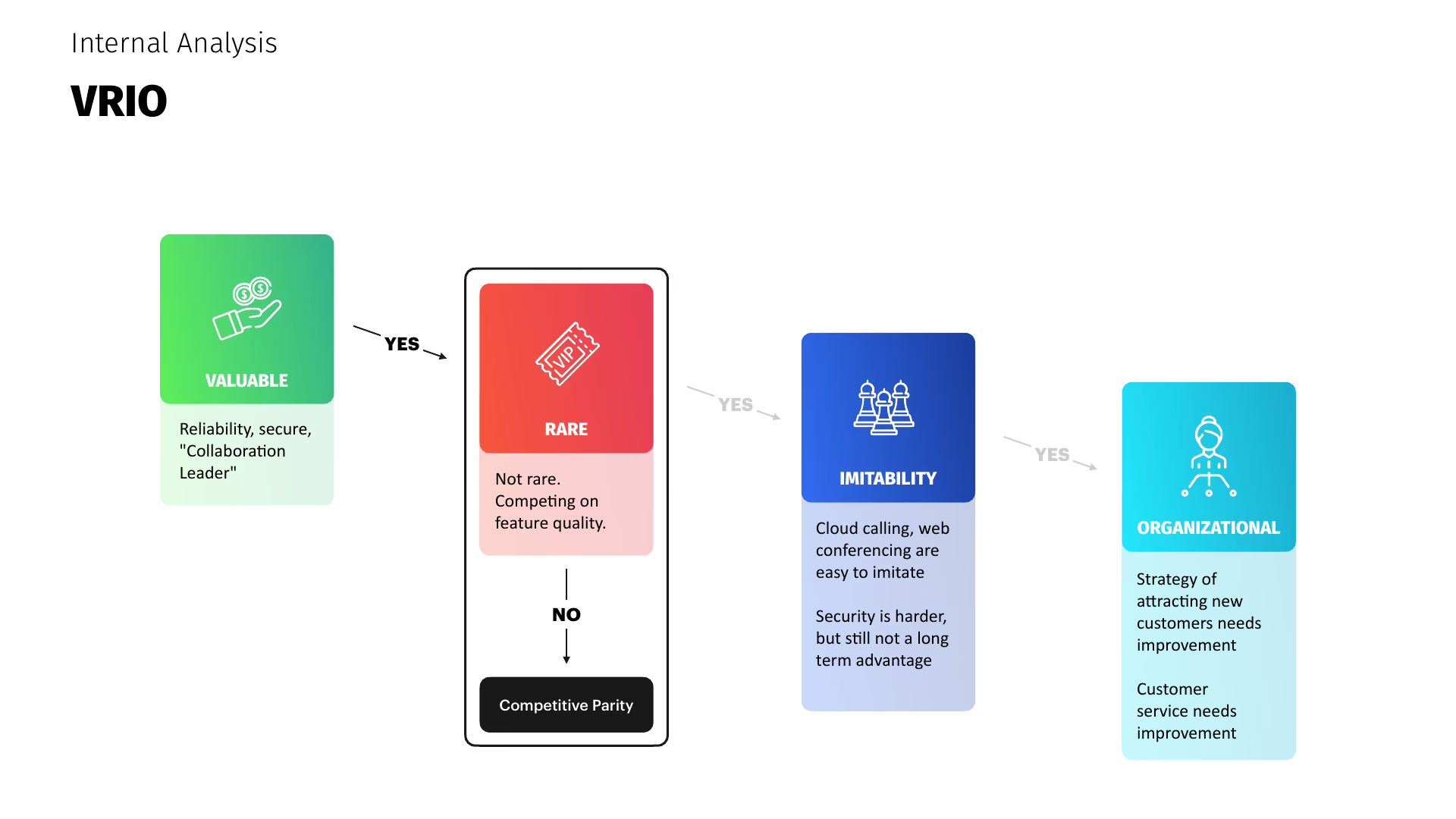
The team's own VRIO test: valuable, but not rare. That's competitive parity, not a moat.
The Perception Gap
What people actually say about each platform
A crowd-sourced word-cloud survey asked people what comes to mind for Webex, Zoom, and Microsoft Teams. Webex's largest words were "old" and "outdated," alongside "clunky" and "interface" (deck page 37). Zoom's largest word was "video," tied to "covid," "pandemic," and "background" (deck page 35). Teams's largest word was "easy," with "integrated" and "chat" close behind (deck page 36).
The gap isn't a feature gap. It's a decade of accumulated brand residue the product improvements haven't overwritten yet.
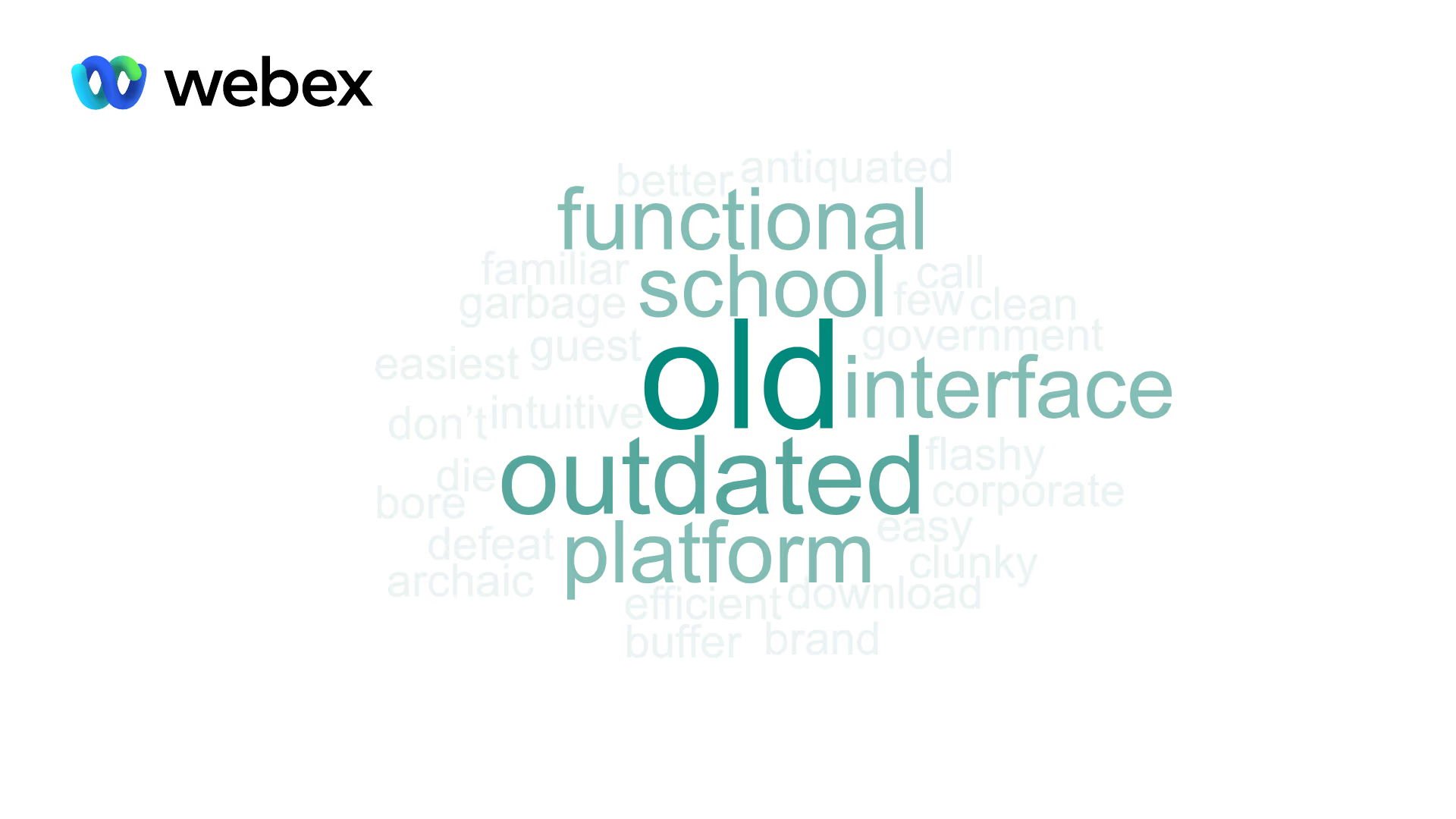
Webex's own sentiment survey. "Old" is the biggest word in the room.
Customer Targeting
Claire, Emma, and Weston expose the targeting gap
Three personas, built around remote-work behavior rather than job-title verticals: Claire, an entrepreneur managing a 13-person team who values personal connection; Emma, a senior developer and top individual contributor who works remote across cities; Weston, a photographer whose work takes him around the globe (deck page 13). Each is scored across communication, file management, project management, and remote-work percentage.
A fourth category, "Influencers" — professionals like William, a coaching instructor who spends long hours on video calls — extends the targeting question to people who shape adoption inside their own networks, not just direct buyers (deck page 14).
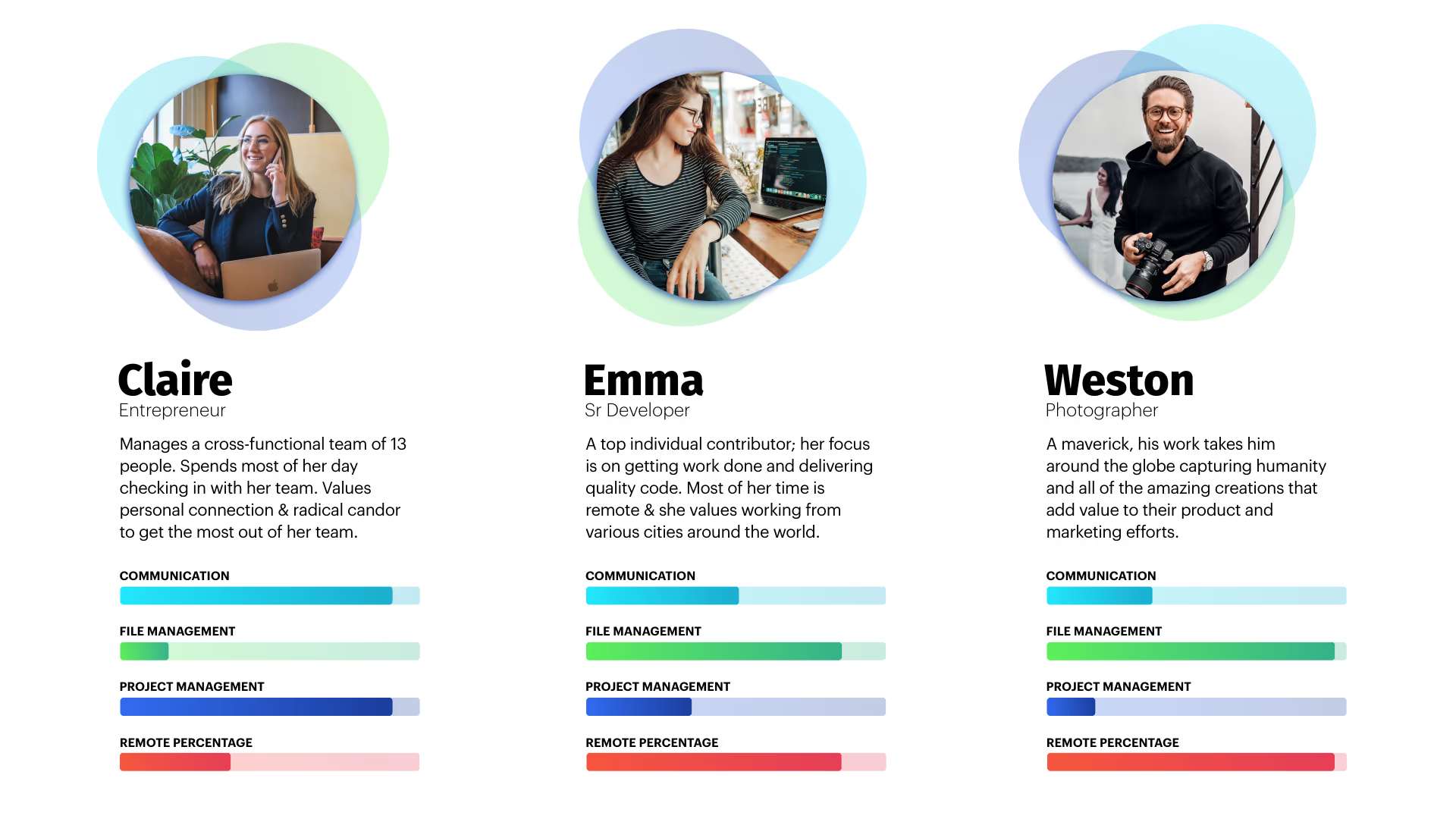
Claire, Emma, Weston — the three personas built to expose the targeting gap.
The Strategy
Five pillars, each with its own recommendation
Customer Targeting, Strategic Alliances, Organizational Alignment, Bundling, and Rebrand (deck page 12). Each pillar got a specific, sourced recommendation rather than a generic bullet: open the Webex App Hub to the free tier to compete with Teams's Office-bundled value (deck page 20); build two-way interoperability with the apps people already use (deck page 26); bundle Cisco's networking and security hardware across enterprise, startup, and home-wireless segments (deck page 28); shift sales and customer success from a long-form B2B funnel toward a scalable, community-first model (deck pages 30, 33).
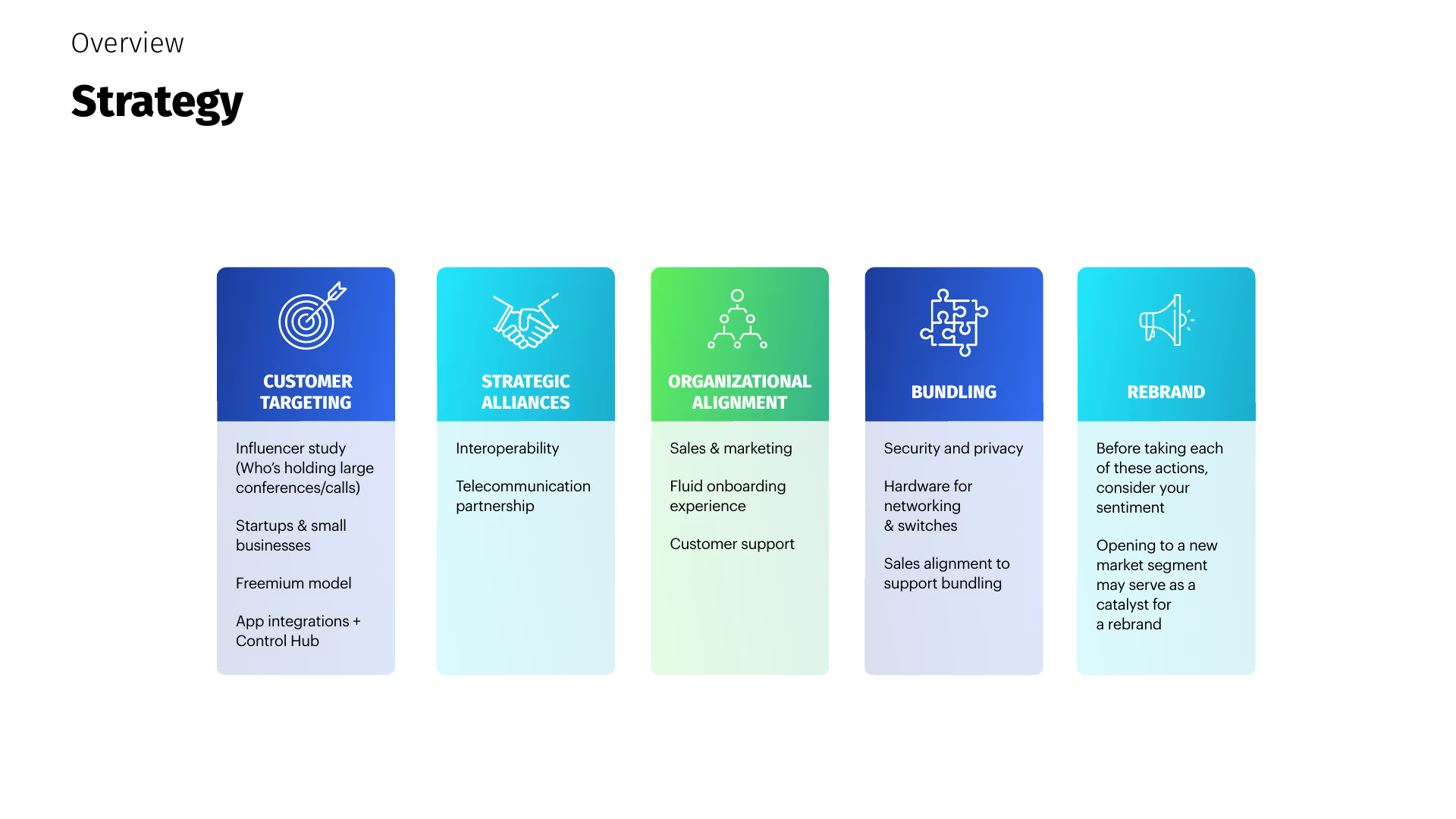
The five-pillar strategy. Rebrand sits last.
The deck's own framing
The slide's two closing lines: "Before taking each of these actions, consider your sentiment" and "Opening to a new market segment may serve as a catalyst for a rebrand." Rebrand is positioned last among the five pillars — as a consequence of the other four, not a substitute for them (deck page 12).
The Recommendation
Open the App Hub instead of matching the bundle feature-for-feature
Microsoft's advantage isn't a better meeting — it's a free bundle. Teams ships inside Microsoft's software bundle alongside Outlook, Word, Excel, and PowerPoint, at effectively no marginal cost (deck page 11). Webex's basic tier, by contrast, ships with limited third-party apps and no file storage or team management (deck page 19).
The team's recommendation: open the Webex App Hub — and potentially Control Hub — to the free tier, so Webex's version of a bundle is an open integration layer instead of a closed Microsoft-owned one (deck page 20).
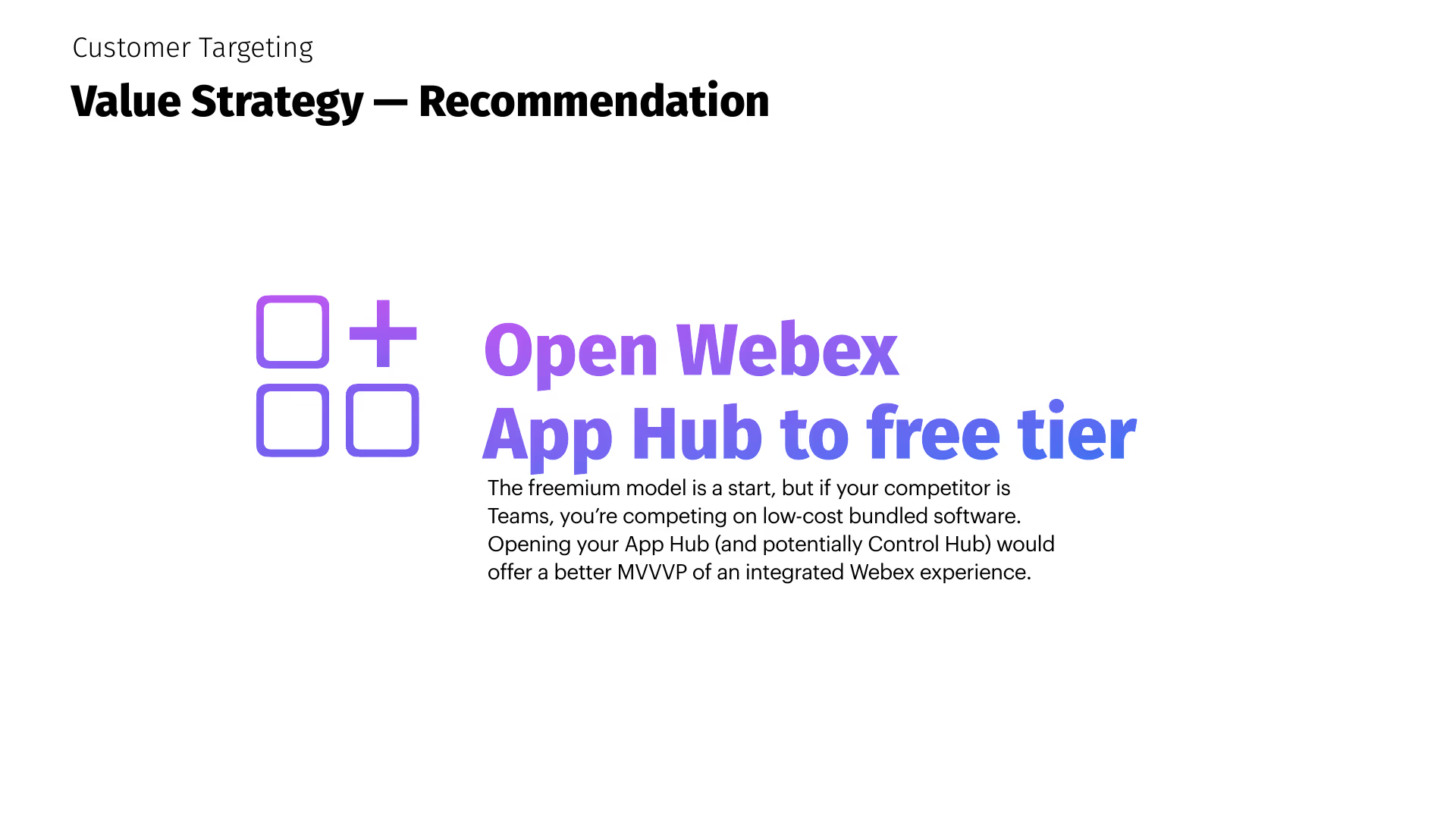
The recommendation: compete on an open integration layer, not a feature-by-feature match.
Process Book
The full 52-page deck
Charles Breitmayer, Josh Carroll, Tanner Truelove, Mike Soussan, and I took this on in spring 2022 as a live case from Cisco. We ran it as one team, start to finish: PESTEL, Porter's, SWOT, and VRIO up front, then five recommendations, then the market and security data we used to back them.
Four pages are missing from the set below. They're screenshots of our own workspace, and they show my teammates' email addresses, so I left them out.
The PDF at the top of the page is our written brief, not this deck. I never had a PDF of the deck itself, so this is the only place to read it.
Process
PESTEL, Porter's Five Forces, SWOT, and VRIO applied to Webex's position — VRIO's own verdict: competitive parity, not a moat.
Crowd-sourced sentiment survey: Webex's top word was 'old,' Zoom's was 'video,' Teams's was 'easy.'
Five recommendations across customer targeting, alliances, bundling, and org alignment — each paired with its own deck slide.
Positioned as the pillar that follows the sentiment work, not a standalone aesthetic move.
What Shipped
4
Strategic frameworks
3
Personas
5
Recommendations
A full strategic analysis of Webex's position against Zoom, Microsoft Teams, and Slack: PESTEL, Porter's Five Forces, SWOT, and VRIO. The VRIO test found Webex's core strengths valuable but not rare — competitive parity, not a defensible moat. A crowd-sourced sentiment survey found Webex's top association was "old" (Zoom's was "video"; Teams's was "easy"). Three personas — Claire, Emma, Weston — exposed a targeting gap the team's marketing wasn't addressing. Five sequenced recommendations followed: open the Webex App Hub to the free tier, build two-way app interoperability, bundle Cisco hardware across enterprise, startup, and home-wireless segments, shift sales and support toward a scalable community model, and treat rebrand as the pillar that follows the sentiment work, not the one that replaces it.
- PESTEL + Porter's Five Forces + SWOT + VRIO applied — VRIO's own verdict: Webex's advantages are valuable but not rare, competitive parity rather than a moat
- Crowd-sourced sentiment survey: Webex's top association was "old," with "outdated" second — against "video" for Zoom and "easy" for Teams
- Three personas — Claire, Emma, Weston — built around remote-work archetypes, exposing a targeting gap in undifferentiated messaging
- Five-pillar recommendation set, each with its own sourced fix: open the App Hub to free tier, build two-way integrations, bundle Cisco hardware, shift to a community-first sales model, and rebrand last
What I Learned
The most useful finding wasn't a gap in the product — it was a gap between the product and its own strategic self-assessment. Running VRIO honestly on Webex's real strengths (security, reliability) returned "not rare," which is where the test formally stops — the team worked the imitability and organizational boxes anyway, to build a plan out of the answer. That's an uncomfortable answer to reach in a team project, and the deck reports it straight rather than reframing it into a moat that isn't there. The sentiment survey backed it up in plain language: asked for one word, people said "old." Not a tally of missing features — a brand impression the real product improvements hadn't caught up to. The five recommendations that follow are built to work under that constraint: win on distribution and integration (open the App Hub, build interoperability) and org design (community-first support), not on a claimed advantage the team's own analysis couldn't support. The appendix data is a useful contrast — on the Synergy Research figures the deck cites (year-end 2020 through Q1 2021), Cisco led cloud-calling subscriber share, and on the NSA's table it met more encryption criteria than Teams, Slack, or Zoom. Both things are true at once: real category leadership in calling and security, and no VRIO-grade moat in the mainstream video-conferencing fight. Good strategy work holds both without picking the more flattering one.
What this demonstrates
More Work
All projects →